
Sauces & Condiments
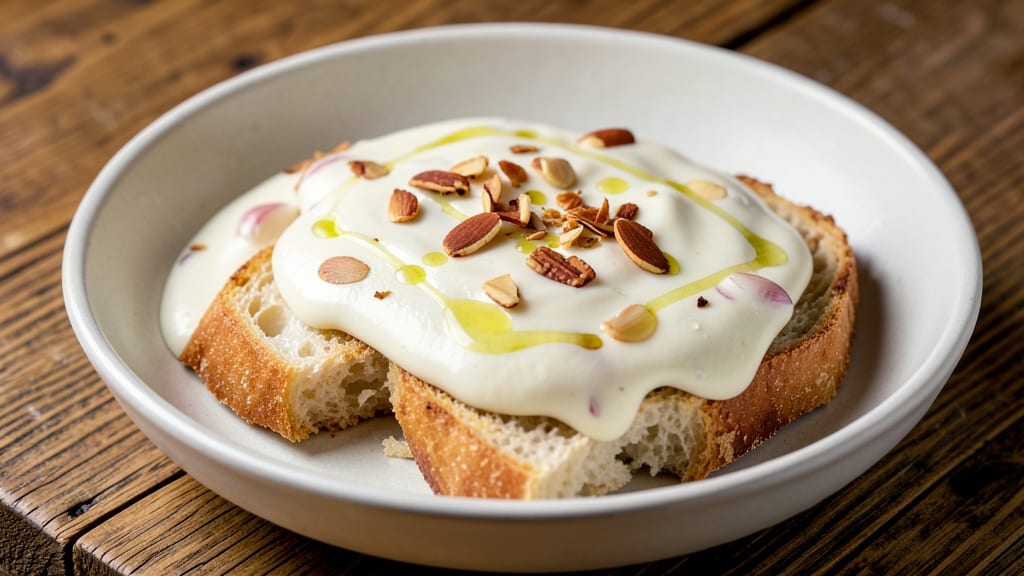
This ajo blanco sauce recipe transforms humble ingredients into a velvety, chilled Spanish classic that's equally at home as a soup or seafood sauce. The magic lies in its perfectly balanced flavors—rich garlic, nutty almonds, and bright vinegar—all blended into a silky emulsion that feels impossibly light.
I've perfected this version to deliver that signature creamy texture without heavy cream, making it ideal for hot summer days or elegant seafood dinners.
The foundation begins with day-old bread soaked in water and garlic, which forms the base of our sauce. When blended with almonds, olive oil, and vinegar, it creates an emulsion that's smooth yet still vibrant with garlic's bold character.
The key technique is blending the mixture while still warm, which helps create that signature velvety consistency that sets ajo blanco apart from other cold soups.
What makes this sauce truly special is its versatility—serve it chilled as a refreshing soup with crusty bread, or drizzle it over grilled fish, gambas al ajillo, or even cold seafood platters. The almonds add subtle richness while keeping the sauce light, and the vinegar brightens every spoonful.
With just 10 minutes of active prep and 30 minutes of chilling time, you'll have restaurant-quality sauce ready to impress.
This recipe yields about 4 cups of sauce, perfect for two as a light meal or four as a side. Store it in the refrigerator for up to 3 days, where the flavors actually deepen and develop.
The secret to its success lies in the balance—too much garlic can overpower, while insufficient almonds will leave it thin. Trust the recipe, and you'll achieve that perfect equilibrium between creamy, garlicky, and tangy that defines ajo blanco.
Ingredients for ajo blanco sauce
Eight simple ingredients create this velvety Spanish classic perfect for summer dining.
| Ingredient | Amount | Notes |
|---|---|---|
| Day-Old Bread 🍞 | 1 cup | Crusts removed, cubed |
| Garlic Cloves 🧄 | 8 cloves | Fresh, peeled, roughly chopped |
| Raw Almonds 🥜 | ½ cup | Skin-on for texture, toasted |
| Extra-Virgin Olive Oil 🫒 | 1 cup | High-quality, fruity |
| White Wine Vinegar 🍷 | ¼ cup | Balsamic works too |
| Cold Water 💧 | 1 cup | For soaking bread |
| Salt 🧂 | 1 tsp | Diamond Crystal preferred |
| Lemon Juice 🍋 | 1 tbsp | Freshly squeezed |
The bread is your foundation—day-old works best (none of that soggy fresh stuff). Baguette or rustic loaves from Whole Foods or your local bakery give the best texture. Toast the almonds in a dry pan for 3-4 minutes until golden—this deepens their flavor dramatically. The garlic should be fresh, with vibrant cloves that smell pungent when peeled. Spanish markets often carry premium garlic varieties, but your grocery store's standard cloves work fine too. Just don't skimp here—garlic is what makes ajo blanco sing.
No almonds? Walnuts or cashews work in a pinch, but toast them first for that nutty depth. Short on vinegar? Apple cider vinegar at half the amount gives a slightly sweeter profile. The olive oil matters—use something you'd drizzle on good bread. California avocado oil has a neutral taste that won't compete with the garlic. For a smoother texture, strain the blended mixture through a fine-mesh sieve after blending, but trust me, the rustic texture adds character. The lemon juice is non-negotiable—it brightens everything and balances the richness.
This sauce keeps beautifully in the fridge for 3-4 days, where the flavors actually improve. The emulsion thickens as it chills, so give it a quick whisk before serving. For longer storage, transfer to an airtight container with a thin layer of olive oil on top—keeps for up to 2 weeks. I always make a double batch—half for immediate use, half to freeze in ice cube trays for quick single servings later. The almonds and garlic can be prepped ahead too, so this is perfect for meal prep.
Why You'll Love This Recipe
- No Chopping Needed: I toss in stale bread cubes straight from the counter—no fancy toasting or slicing. The almonds get a quick whiz in the food processor, and boom, you’re done. Honestly, this is the kind of recipe that makes me laugh because it’s so simple.
- Garlic Overload (In a Good Way): That raw garlic? It gets toasted in olive oil until it’s nutty and fragrant, not sharp or overpowering. The vinegar cuts through the richness, giving it this bright, almost tangy depth that pairs perfectly with grilled fish or crusty bread.
- Leftovers? Just Better Sauce: If I make a batch and don’t use it all, it actually improves overnight. The flavors meld, the texture gets smoother, and it’s still creamy enough to drizzle over roasted veggies or toss with pasta. No waste, just more deliciousness.
- Budget Meets Fancy: Day-old bread, a handful of almonds, and a few cloves of garlic—this sauce costs next to nothing but feels like a restaurant dish. I’ll be real: my friends think I spent hours on it when I just stirred for 10 minutes.
Step-by-step instructions for chilled garlic and almond cream sauce
This Andalusian classic transforms humble ingredients into velvety, refreshing sauce with perfect balance.
Toast Almonds and Prepare the Bread
In a dry skillet over medium heat, toast the 0.5 cup raw almonds for 3-4 minutes until they turn a light golden color and release their nutty aroma. Watch carefully—they'll darken quickly. Immediately transfer to a cutting board and roughly chop them with a knife while still warm. This preserves their flavor and texture.
Meanwhile, tear the 1 cup day-old bread into small pieces, removing any crusts. Place the bread in a bowl and pour over the 1 cup cold water. Let it soak for 5 minutes until completely saturated but not mushy. The bread should absorb the water like a sponge—squeeze out any excess liquid before proceeding. This forms the base of our sauce.
Blend the Garlic-Almond Mixture
In a food processor, combine the toasted almonds with the 8 cloves garlic cloves. Pulse until the mixture becomes a fine paste with no whole almonds remaining. This creates the signature nutty foundation of ajo blanco. Add the soaked bread pieces and pulse again until everything is finely blended. You'll see a thick, pale paste forming.
With the processor running, slowly drizzle in the 1 cup extra-virgin olive oil through the feed tube. This gradual addition prevents the oil from splattering and ensures even emulsification. Process for 1-2 minutes until completely smooth. The mixture should resemble thick mayonnaise but with a nutty aroma. Taste at this point—you'll notice the raw garlic flavor dominates.
Emulsify with Vinegar and Season
Add the 0.25 cup white wine vinegar and the 1 tsp salt to the processor. Pulse for 30 seconds to combine. The vinegar brightens the flavors and balances the richness. With the processor running, add the 1 tbsp lemon juice and process for another 1 minute until perfectly smooth and creamy.
Transfer the mixture to a bowl and taste. The sauce should be tangy, nutty, and slightly garlicky with a velvety texture. If it's too thick, add 1-2 tablespoons cold water at a time until it reaches a pourable consistency. For extra smoothness, strain through a fine-mesh sieve into a clean bowl. This removes any remaining bread particles for a restaurant-quality finish.
Chill and Serve
Cover the sauce and refrigerate for at least 2 hours to allow the flavors to meld and the texture to set properly. This chilling time is crucial—it transforms the sauce from good to exceptional. The cold temperature also mellows the garlic flavor, making it more pleasant.
Before serving, give the sauce a quick whisk or stir to ensure even consistency. The ajo blanco should be thick enough to coat the back of a spoon but still pourable. Serve it chilled as a refreshing accompaniment to grilled fish, cold seafood platters, or crusty bread. The contrast between the cool sauce and warm dishes makes every bite memorable.
Pro Tips For Making Ajo Blanco Sauce
- TOAST THE BREAD LOW: I used to blast the bread under the broiler, thinking it’d crisp faster—wrong. Instead, toast it at 325°F (160°C) for 10-15 minutes until it’s dry but not browned. This prevents the sauce from turning gummy when soaked, and the bread crumbles perfectly for that silky texture.
- SMASH THE ALMONDS COLD: Raw almonds release their flavor best when they’re ice-cold. Pulse them in the food processor until they’re fine but not paste—think coarse sand, not butter. Warm almonds turn greasy and dull the sauce’s brightness.
- CONTROL THE GARLIC HEAT: Cook the garlic in olive oil over medium-low heat until it’s golden, not browned. If it burns, the sauce will taste bitter. Remove the pan from heat just before the garlic looks done—it’ll keep cooking from residual heat, and that’s when it shines.
- STRAIN THE SAUCE TWICE: After blending, strain the sauce through a fine-mesh sieve first, then a cheesecloth. The second straining catches those stubborn bread fibers that make the sauce clumpy. Yes, it’s extra work, but the result is smooth as silk—no one will guess you put in the effort.
Wine and beer pairings for this dish
Spanish White Wine
For ajo blanco, I always reach for a crisp Albariño from Rías Baixas—its bright acidity and citrus notes cut through the sauce's richness beautifully. The mineral finish mirrors ajo blanco's clean, garlicky profile. Verdejo from Rueda is another fantastic choice, offering floral notes that complement the almond's nuttiness.
Serve these wines slightly chilled (45-50°F) to enhance their refreshing qualities alongside your sauce. 🍷
Dry Sherry
A dry Fino or Manzanilla sherry adds an authentic Spanish touch to your ajo blanco experience. The nutty, almond-like flavors of these sherries create a delicious harmony with the sauce's base ingredients.
Look for brands like Tío Pepe or González Byass for quality options. Serve at room temperature to let the sherry's complex flavors shine through.
Light Lager
If you prefer beer, opt for a crisp, light Spanish lager like Estrella Galicia or Alhambra Especial. The subtle malt sweetness balances ajo blanco's tangy, garlicky notes without overpowering them. For a Belgian twist, try a witbier such as Hoegaarden—its coriander and citrus notes create an interesting contrast.
Serve all beers well-chilled (38-42°F) to complement the sauce's cool temperature.
Sparkling Wine
For a festive touch, pair ajo blanco with a dry Cava like Freixenet Cordon Negro. The bubbles cleanse your palate between spoonfuls of sauce, while the acidity enhances the garlic's intensity.
If you prefer champagne, choose a Brut style—its crispness and green apple notes create a delightful contrast. Serve sparkling wines at 45-50°F to maintain their refreshing qualities.
Non-Alcoholic Options
For those avoiding alcohol, a sparkling mineral water like Perrier or San Pellegrino works beautifully. The effervescence enhances ajo blanco's creamy texture, while the mineral content complements its garlicky depth.
Alternatively, try a ginger beer like Feather's—the ginger's spice adds warmth that contrasts nicely with the sauce's cool temperature. 💧
Nutrition facts
Frequently asked questions
Can I make ajo blanco without almonds?
Yes, but the texture will be thinner and less rich. Use 0.5 cup walnuts or cashews instead—just toast them first to enhance their flavor. For a creamier version, blend in 2 tablespoons tahini with the oil, but reduce the water slightly to maintain balance. The nutty base is key to ajo blanco's signature character.
Why does my ajo blanco separate or break?
This happens when the emulsion isn't properly formed during blending. Always add the olive oil slowly while processing to bind the mixture. If it separates later, whisk vigorously with 1 tablespoon cold water and chill again. For extra stability, add 1 teaspoon cornstarch mixed with water to the final blend.
How can I make ajo blanco smoother?
Strain the blended mixture through a fine-mesh sieve after processing for a silky texture. For an ultra-smooth version, blend again with 2-3 tablespoons cold water after straining. The key is patience—chill for at least 2 hours to let flavors meld and textures refine.
What's the best way to store ajo blanco?
Transfer to an airtight container and refrigerate for up to 3 days. For longer storage, pour a thin layer of olive oil on top and freeze in ice cube trays. Thaw overnight in the fridge—this maintains the creamy texture. The sauce actually improves with time as flavors develop!
Can I use ajo blanco as a marinade?
Not directly, but its flavors work beautifully for pre-dipping! Use it as a marinade base by thinning with 1 cup water and adding 1 tablespoon lemon juice. For seafood, coat shrimp or fish for 15-20 minutes max—the raw garlic can overpower delicate proteins if left too long. Always serve chilled after marinating.