
Sauces & Condiments
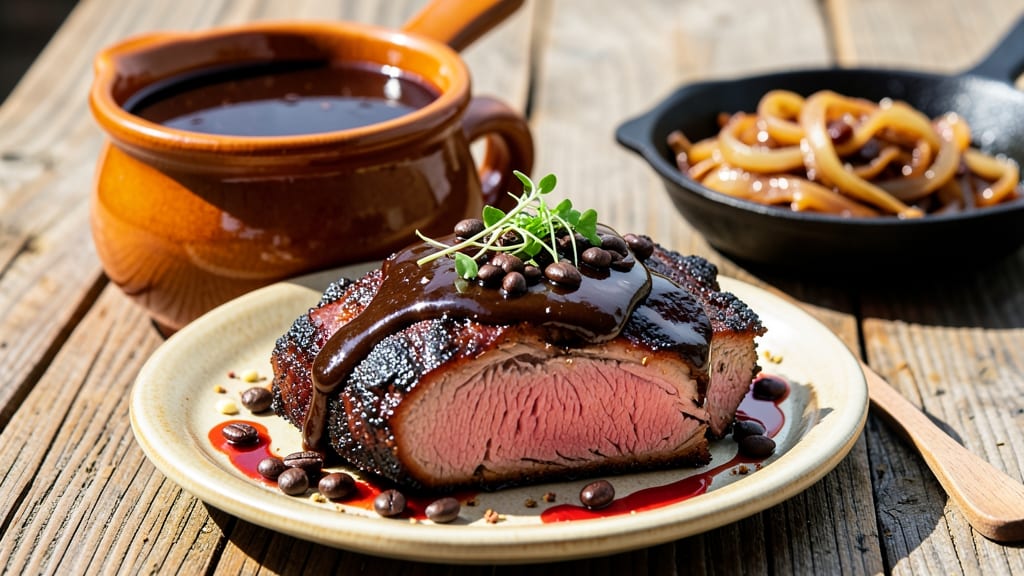
Aaron Franklin's espresso BBQ sauce transforms your grill into a coffeehouse-meets-smokehouse experience. The deep, bittersweet notes of espresso cut through the richness of traditional BBQ, creating a sauce that's both bold and balanced. I first discovered this technique while experimenting with Texas-style brisket, and it became an instant game-changer for any smoked meat.
This sauce builds on Franklin's signature style by incorporating freshly brewed espresso into a rich blend of molasses, vinegar, and spices. The key is simmering everything together until the flavors meld into a glossy, aromatic sauce that's perfect for basting ribs, glazing brisket, or drizzling over pulled pork.
The coffee grounds add depth without overpowering, while the spices provide just the right amount of heat.
What you'll end up with is a sauce that's glossy, aromatic, and packed with smoky-sweet complexity. It clings beautifully to meat, caramelizing into a sticky glaze that enhances every bite.
The espresso infusion creates a unique depth that sets this sauce apart from traditional versions, making it ideal for adventurous grillers who want to elevate their BBQ game.
Store it in the refrigerator for up to 2 weeks or freeze for longer storage, making it perfect for meal prep. This sauce transforms ordinary grilled dishes into extraordinary experiences—once you try it, you'll never go back to plain BBQ sauce again.
Ingredients for aaron franklin espresso bbq sauce
Nine ingredients transform ordinary BBQ into a coffeehouse-inspired masterpiece with bold, aromatic depth.
| Ingredient | Amount | Notes |
|---|---|---|
| Freshly Brewed Espresso ☕ | 1 ½ cups | Strong, freshly brewed preferred |
| Unsweetened Molasses 🍯 | ¾ cup | Dark molasses for depth |
| Apple Cider Vinegar 🍎 | ½ cup | For tangy balance |
| Yellow Onion 🧅 | 1 whole | Finely chopped, sweet variety |
| Garlic Cloves 🧄 | 4 cloves | Minced for aromatic depth |
| Freshly Ground Coffee Beans ☕ | 2 tbsp | Cold brew style, not instant |
| Smoked Paprika 🌶️ | 2 tbsp | For authentic smokiness |
| Ground Cinnamon 🌿 | 1 tsp | Warmth without overpowering |
| Kosher Salt 🧂 | 1 ½ tsp | Diamond Crystal preferred |
| Black Peppercorns 🌶️ | ½ tsp | Freshly cracked for bite |
The espresso is non-negotiable—freshly brewed makes all the difference. I grab my beans from Counter Culture Coffee for the best roast, but any quality dark roast works. The molasses? Gull brand has the perfect balance of sweetness and bitterness—avoid the lighter varieties. For the coffee grounds, cold brew style (steeped overnight) adds richness without bitterness. The onion and garlic should be finely chopped—no big chunks here. Smoked paprika is key; Penzeys has the best selection if you're hunting for authentic flavors.
No freshly brewed espresso? Strong cold brew concentrate works in a pinch, but it won't have the same depth. Swap the molasses for maple syrup at half the amount if you're avoiding it, though the sauce will taste different. Freshly cracked peppercorns add a subtle bite—pre-ground loses punch fast. The vinegar is crucial for balance; apple cider vinegar has the right fruity tang, but white vinegar in a bind. For extra smokiness, add 1 tbsp liquid smoke, but use sparingly—it can overpower the delicate coffee notes. The spices should be toasted lightly in a dry pan before adding for deeper flavor.
This sauce keeps 2 weeks refrigerated in a sealed jar, but the flavor actually improves after 3-4 days as everything melds. For longer storage, freeze in ice cube trays—perfect for single-use portions. Reheat gently on the stove, stirring constantly to prevent scorching. The sauce thickens as it cools, so add a splash of water if it gets too stiff. Trust me, the first time you baste ribs with this, you'll never go back to store-bought again.
Why You'll Love This Recipe
- Pantry Magic: I swear by this sauce because it uses stuff I already have—no fancy shopping trips. That molasses and vinegar combo? It’s my secret for depth without extra trips to the store.
- Deep Umami Kick: The espresso isn’t just for coffee—it adds this smoky, almost charred richness that cuts through the sweetness. Honestly, one taste and you’ll understand why BBQ lovers obsess over it.
- Weeknight BBQ Hero: Slap this on grilled chicken, ribs, or even roasted veggies in 10 minutes. No fancy plating, no stress—just flavor that makes lazy nights feel like a win.
- Stays Fresh Forever: Make a big batch (I always do) and it keeps in the fridge for weeks. Freezes like a dream too—so when you’re craving that smoky-sweet punch, you’re never stuck.
Step-by-step instructions for Aaron Franklin's espresso BBQ sauce
Here's how to craft a sauce that balances deep coffee richness with classic Texas BBQ tang.
Build the Flavor Base with Onion and Garlic
In a heavy-bottomed saucepan, combine the 1 whole yellow onion (finely chopped) and 4 cloves garlic (minced) with 0.5 cup apple cider vinegar. Bring to a simmer over medium heat, then reduce to low heat and cook for 10-12 minutes until the onion becomes translucent and the garlic releases its aromatic oils.
The vinegar will help break down the onion's sugars early, creating a sweet foundation for the sauce. You'll know it's ready when the mixture smells intensely sweet and the onion has softened completely. Keep the heat low to prevent burning—this is where subtle flavors develop, not dramatic color changes.
Incorporate Coffee and Spices for Depth
Add the 1.5 cups freshly brewed espresso and 2 tbsp freshly ground coffee beans to the pan. Stir constantly for 3-4 minutes until the coffee begins to reduce slightly and the beans infuse their bitterness into the mixture. Next, whisk in the 2 tbsp smoked paprika, 1 tsp ground cinnamon, 1.5 tsp kosher salt, and 0.5 tsp black peppercorns. Let this blend simmer for 5 minutes to allow the spices to bloom.
This is where the sauce gets its signature complexity. The coffee beans should dissolve completely, and you'll notice the mixture darkening as the spices meld. If you smell any raw coffee aroma lingering, simmer another 2 minutes—it should transform into a smooth, aromatic base rather than a gritty one.
Sweeten and Thicken the Sauce
Pour in the 0.75 cup unsweetened molasses and stir vigorously to combine. Increase the heat to medium-low and let the sauce simmer uncovered for 20-25 minutes, stirring occasionally. You're looking for a thick, syrupy consistency—it should coat the back of a spoon but still flow freely when stirred. If it thickens too quickly, add 1-2 tablespoons of water to maintain balance.
The molasses will create a rich, caramel-like sweetness that contrasts beautifully with the coffee's bitterness. Here's the thing—don't rush this step. The sauce needs time to develop its depth. You'll know it's ready when it coats the back of a spoon and has a glossy sheen, indicating proper reduction.
Strain and Rest for Maximum Flavor
Once thickened, remove the pan from heat and let the sauce cool slightly for 5 minutes. Then, strain it through a fine-mesh sieve into a clean bowl or jar, pressing gently on the solids to extract all the flavor. Discard the strained solids—they've done their job. Let the sauce cool completely to room temperature before storing.
Straining ensures a silky texture without any grit from the coffee beans or spices. The sauce will continue thickening as it cools, so don't be tempted to thin it further. This resting period also allows all the flavors to fully meld, resulting in a sauce that's far more complex than the sum of its parts.
Pro Tips For Making Aaron Franklin Espresso Bbq Sauce
- Reduce Vinegar Slowly: Start with half the apple cider vinegar and simmer the sauce uncovered for 10 minutes first—this lets the acid mellow out before you add the rest. I used to dump it all in at once, and the sauce ended up sharp and unbalanced. That first reduction makes a real difference in the depth of flavor.
- Char the Onion: Blacken the yellow onion slices in a dry skillet for 3-4 minutes before adding them to the sauce—this caramelizes the sugars and adds a smoky edge that cuts through the molasses. Sounds weird, but it works: the sauce gains complexity without needing extra spices.
- Strain the Espresso: Use a fine-mesh strainer or cheesecloth to filter the espresso before adding it to the sauce—this removes bitter grounds that can make the sauce taste gritty or harsh. I learned this the hard way after slurping through a batch with sediment that ruined the texture.
- Simmer Low and Long: Keep the heat at a bare simmer (small bubbles, occasional swirls) for at least 45 minutes—rushing it leaves the molasses cloying and the vinegar tangging. After burning three batches, I finally figured out that patience lets the flavors meld instead of fight.
Regional styles of this aaron franklin espresso bbq sauce
Texas Smokehouse Style
This sauce takes its inspiration from Aaron Franklin's legendary Texas BBQ approach, where deep smoke flavors meet unexpected ingredients. In his Austin smokehouse, Franklin often experiments with coffee-infused rubs and sauces to cut through the richness of brisket and ribs.
The key here is balancing that Texas smokiness with the espresso's bittersweet notes—think of it like a bold cup of coffee after a hearty meal.
I've seen Franklin use this technique with 30-hour smoked brisket, where the sauce acts as both a glaze and a flavor enhancer during the final hours. 🌶️
The Texas version often includes a touch of chipotle powder (about ½ tsp) for extra smokiness, which you can add if you want to lean even harder into that Franklin-style profile.
The molasses in this recipe mirrors the sweetness of Texas-style sauces, while the espresso provides that unexpected depth that sets Franklin's work apart from traditional BBQ. For an authentic touch, finish your ribs with a sprinkle of coarse sea salt right before applying the sauce—it enhances the caramelization.
Carolina Coffee Twist
In North Carolina, where vinegar-based sauces reign supreme, this espresso BBQ sauce becomes a game-changer for pulled pork and chicken.
The tangy apple cider vinegar in this recipe aligns perfectly with Carolina traditions, while the coffee adds a sophisticated twist that elevates it beyond the classic mustard-based sauces you'd find at a pit competition.
I once made this version for a Carolina-style pulled pork sandwich and was amazed at how the coffee notes complemented the vinegar's sharpness. 🍗
For a true Carolina adaptation, reduce the molasses to ½ cup and add 1 tbsp yellow mustard powder to the spice blend. This creates a lighter, more tangy sauce that's perfect for slathering on pulled pork sandwiches.
The espresso still shines through but doesn't overpower the vinegar's signature Carolina tang. Serve it on a soft potato bun with coleslaw for the full experience.
Midwest Coffeehouse BBQ
In the Midwest, where coffee culture runs deep, this sauce becomes a natural fit for everything from smoked sausages to grilled corn. The espresso's prominence makes it feel right at home in states like Wisconsin or Michigan, where coffee shops are as common as BBQ joints.
I've used this recipe to glaze smoked bratwurst and even as a dipping sauce for grilled corn on the cob, and it works beautifully in both cases. The coffee's bitterness balances the sweetness of the molasses, creating a sauce that's complex enough for a coffee lover's palate. ☕
For Midwest applications, consider adding 1 tsp ground coriander to the spice blend—it adds a citrusy note that complements the coffee beautifully. The sauce also pairs wonderfully with Chicago-style hot dogs or as a marinade for grilled chicken thighs.
The key is letting the sauce sit for at least 24 hours before using it, which allows the flavors to fully develop and creates that perfect balance between coffee and BBQ.
Pacific Northwest Fusion
Out West, where coffee culture is equally strong, this sauce becomes a perfect fusion for grilled salmon and even smoked lamb. The Pacific Northwest's love of both coffee and bold flavors makes this espresso BBQ sauce a natural fit.
I've used it to glaze smoked salmon and even as a marinade for grilled portobello mushrooms, with incredible results. The coffee's depth pairs surprisingly well with the earthiness of salmon and the umami of mushrooms. 🌊
For Pacific Northwest adaptations, reduce the molasses to ½ cup and add 1 tsp ground cardamom to the spice blend. This creates a lighter, more aromatic sauce that works beautifully with seafood and game meats.
The espresso's bitterness cuts through the richness of salmon perfectly, while the cardamom adds a subtle floral note that's characteristic of West Coast cuisine. Try brushing it on grilled halibut or using it as a dipping sauce for smoked trout.
Nutrition facts
Frequently asked questions
Can I substitute instant coffee for freshly brewed espresso?
Instant coffee won't provide the same depth of flavor, but you can use 1 tbsp instant espresso powder dissolved in 1.5 cups hot water as a substitute. For best results, use freshly ground coffee beans steeped in hot water for 10 minutes instead. The key is extracting those rich, complex coffee oils that give the sauce its signature character.
How do I know when the sauce has reached the right consistency?
The sauce is ready when it coats the back of a spoon with a glossy sheen but still flows freely when stirred. Test it by dipping a spoon in and lifting it - if it leaves a thick, smooth trail that doesn't drip immediately, it's perfect. If it's too thin, simmer uncovered for 5 more minutes to reduce further.
What's the best way to use this sauce on different meats?
For ribs and brisket, apply during the last 30-45 minutes of cooking to create a caramelized glaze. On chicken or pork chops, brush on during the final 10 minutes of grilling. For pulled pork or sausages, use it as a finishing sauce after cooking. The espresso notes work especially well with fatty meats that need that bittersweet contrast.
Why does my sauce taste too bitter?
Over-simmering or using too much coffee can create bitterness. Balance it by adding 1-2 tablespoons of apple cider vinegar to cut through the bitterness. If it's still too strong, thin with 1 tablespoon of water and taste as you go. The molasses should naturally sweeten the sauce, so if it's missing that sweetness, you may need to add a bit more during cooking.
Can I make this sauce without molasses?
Yes! Replace the molasses with ½ cup maple syrup plus ¼ cup brown sugar for a similar sweetness level. The sauce will have a slightly different profile but still maintain that coffee-BBQ balance. For a deeper flavor, use ½ cup honey instead, though it may require slightly more simmering time to achieve the same thickness.