
Sauces & Condiments
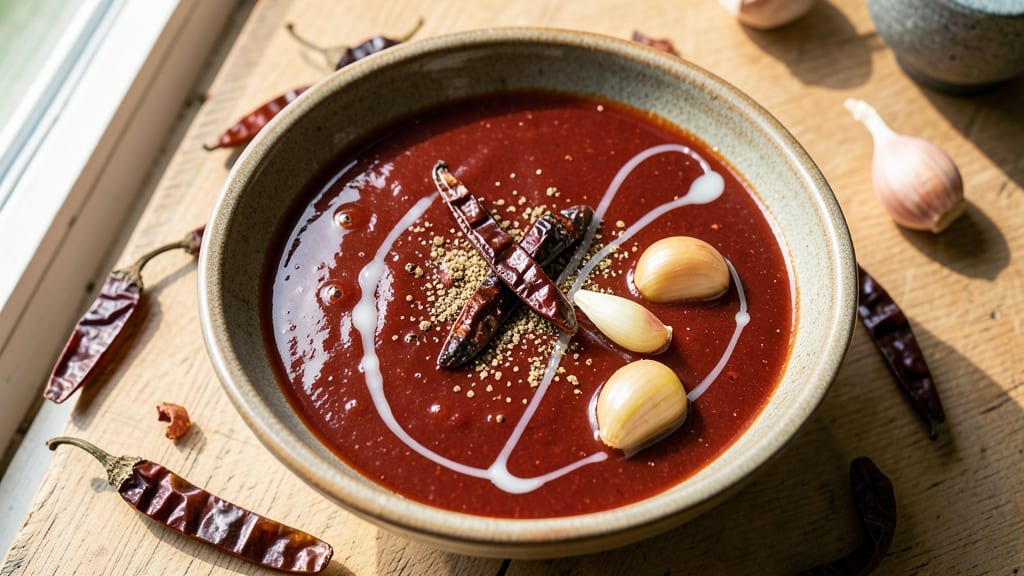
This authentic red chili sauce for tamales transforms your homemade tamales into a restaurant-quality experience with its deep, smoky heat and perfect balance of acidity and sweetness.
The secret lies in toasting dried chilies until they release their aromatic oils, then simmering them with garlic, vinegar, and spices to create a sauce that's rich, vibrant, and impossible to resist.
I've spent years perfecting this recipe to capture the exact flavor profile that makes tamales taste like they came from a family kitchen in Oaxaca.
The process begins with carefully selecting and toasting the chilies—this step is non-negotiable for authentic flavor. We'll use a blend of dried guajillo and ancho chilies for their natural sweetness and depth, balanced with a touch of heat from chipotle.
Simmering the mixture with garlic, cumin, and a splash of vinegar creates a sauce that's both complex and harmonious, with just the right amount of tang to cut through the richness of tamales. The result is a smooth, velvety sauce that coats every bite perfectly.
What makes this sauce truly special is its versatility—it's perfect for tamales, but also elevates grilled meats, beans, or even as a dip for tortilla chips. The consistency is ideal for soaking tamale masa or drizzling over finished tamales, ensuring every bite is infused with that signature smoky-spicy flavor.
Once you try this sauce, you'll never settle for anything less than authentic.
Best of all, this sauce keeps beautifully in the refrigerator for up to two weeks or can be canned for long-term storage. Whether you're preparing for a large gathering or simply want to add authentic flavor to your tamales, this recipe delivers professional results with minimal effort.
Let's get started on creating the perfect red chili sauce for your tamales.
Ingredients for authentic red chili sauce for tamales
Nine simple ingredients transform into the soul of authentic tamales—smoky, spicy, and full of depth.
| Ingredient | Amount | Notes |
|---|---|---|
| Dried Guajillo Chilies 🌶️ | ½ oz | Stems and seeds removed |
| Dried Ancho Chilies 🌶️ | ½ oz | Stems and seeds removed |
| Dried Chipotle Chilies 🌶️ | ¼ oz | Smoked, stems and seeds removed |
| Garlic Cloves 🧄 | 6 cloves | Peeled, roughly chopped |
| White Vinegar 💧 | ½ cup | White or apple cider vinegar |
| Ground Cumin 🌿 | 1 tbsp | Toasted for deeper flavor |
| Cinnamon Stick 🌿 | 1 whole | For warmth, optional |
| Cloves 🌿 | 2 whole | For subtle spice |
| Olive Oil 🫒 | ¼ cup | Extra-virgin for richness |
| Salt 🧂 | 1 tsp | Kosher or sea salt |
The chilies are the heart of this sauce—guajillo and ancho bring sweetness and depth, while chipotle adds smoky heat. Grab them from the Latin market if you can (they’ll be fresher and more flavorful), but the grocery store’s dried section works too. Toasting them in a dry skillet until fragrant unlocks their full potential—don’t skip this step. If you can’t find ancho, swap in pasilla chilies for a deeper, earthier taste. The garlic? Fresh is non-negotiable—jarred garlic just won’t cut it here.
No guajillo chilies? Ancho alone works in a pinch, but the sauce will be less complex. Vinegar can be swapped for orange juice or lime juice if you want a fruity twist, though white vinegar keeps it classic. The cumin and spices? Toast them in the same skillet as the chilies—just 30 seconds—to wake up their flavors. Olive oil is key here; don’t use vegetable oil, as it lacks the fruity depth. For extra richness, add a splash of vegetable broth while blending. And if you’re feeling fancy, a pinch of smoked paprika boosts that authentic smokiness.
This sauce keeps like a dream—2 weeks in the fridge in an airtight jar, or up to 6 months in the freezer. The longer it sits, the better it gets as flavors meld. I like to make a big batch and freeze it in ice cube trays for easy portions—just pop one into tamale masa or drizzle over finished tamales. If it thickens too much, stir in a splash of water or broth. And trust me, leftovers taste even better the next day—the flavors deepen like a fine wine.
Why You'll Love This Recipe
- No Soaking Needed: I’ll admit, I used to dread the soaking step—until I realized these dried chilies (guajillo, ancho, chipotle) just need a quick toast and pulse in the blender. Five minutes max, and you’re blending instead of waiting.
- Smoky-Garlic Magic: That chipotle in adobo brings the heat, but the garlic? Oh, it’s the star—freshly roasted until fragrant, then blended right into the sauce. The balance of smoky, tangy, and just a hint of vinegar sharpness? It’s what makes tamales sing.
- Tamales or Beyond: I’ve drizzled this on everything—grilled chicken, roasted potatoes, even scrambled eggs. The key is adjusting the vinegar for brightness or a splash of water for thinning. It’s my secret weapon for turning simple meals into something special.
- Lasts for Weeks: Honestly, I make a big batch and freeze it. A jar of this sauce keeps for months, so I’m never scrambling for store-bought when tamale night rolls around. Plus, dried chilies are cheaper than jars of pre-made sauce—worth every penny.
Step-by-step instructions for authentic red chili sauce
This smoky, balanced sauce delivers the soul of traditional Mexican tamales—rich, complex, and impossible to resist.
Toast the Dried Chilies to Deepen Flavor
Arrange the 0.5 oz dried guajillo chilies, 0.5 oz dried ancho chilies, and 0.25 oz dried chipotle chilies on a dry skillet over medium-low heat. Toast them for 1-2 minutes per side, stirring constantly, until they darken slightly and release their aromatic oils. You'll smell that unmistakable smoky depth—this step unlocks their full potential.
Watch closely—don't let them burn. Burnt chilies turn bitter and ruin the sauce. Once toasted, transfer them immediately to a heatproof bowl. The slight char adds complexity, but the key is even toasting. This is where the sauce's authenticity begins.
Cover and Steam the Chilies
Pour the 0.5 cup white vinegar over the toasted chilies in the bowl. The vinegar will start steaming them, softening their tough skins and extracting their natural oils. Let them soak for 15-20 minutes—this is crucial for breaking down their fibrous texture.
While they soak, add the 6 cloves garlic, 1 whole cinnamon stick, and 2 whole cloves to the same bowl. The garlic should be roughly chopped, not minced—this prevents it from turning bitter. The spices will infuse the chilies as they soften, creating that warm, aromatic base tamale sauces are known for.
Blend the Chilies with Vinegar and Spices
Using an immersion blender, blend the chilies, garlic, spices, and vinegar directly in the bowl until completely smooth. If you prefer a traditional approach, strain the mixture through a fine-mesh sieve into a clean bowl. This removes skins and seeds, leaving you with a silky, vibrant red purée.
Taste the purée—it should be tangy, slightly sweet, and deeply chili-infused. If it's too acidic, add a splash of water to balance it. Here's where you'll notice the difference between store-bought and authentic: the natural sweetness of the chilies shines through, not artificial flavors.
Cook the Sauce with Olive Oil and Cumin
Heat the 0.25 cup olive oil in a saucepan over medium heat. Once shimmering, add the chili purée and stir constantly for 5-7 minutes. The oil will help distribute the chilies' oils evenly, creating a glossy, velvety texture. Add the 1 tbsp ground cumin and 1 tsp salt, stirring until fully incorporated.
Simmer the sauce for 10-12 minutes until it thickens slightly. You're looking for a consistency that coats the back of a spoon but still flows smoothly—this ensures it clings perfectly to tamales without being gluey. The sauce should smell like a spice market: smoky, warm, and irresistibly aromatic.
Strain and Adjust for Perfection
Strain the sauce through a fine-mesh sieve into a clean bowl to remove any remaining skins or seeds. This final step ensures a silky texture that's perfect for drizzling over tamales or using as a filling. Taste again and adjust seasoning—add a pinch more salt if needed, or a splash of vinegar if it's too thick.
Let the sauce cool slightly before using. The flavors will meld even more as it sits, deepening that authentic tamale sauce profile. This isn't just a sauce—it's the heart of your tamales, where every spoonful tells a story of tradition and care.
Pro Tips For Making Authentic Red Chili Sauce For Tamales
- STEAM THE CHIPS FIRST: I learned this the hard way—tossing whole chipotles into the pot without prepping them means you’ll end up with a sauce that’s more smoky than smooth. Remove the stems, seeds, and those little membranes, then give them a quick steam in a bowl of hot water for 5 minutes. This softens them up just enough so they blend properly without overpowering the guajillo-ancho base.
- TOAST THE DRIED CHILIES: Low and slow is the enemy here. Toast your guajillo and ancho chilies over medium-high heat in a dry skillet for about 30 seconds per side—just until they darken slightly and smell like campfire smoke. Too long, and they’ll turn bitter; too short, and the sauce will taste raw. Flip them often, and keep an eye on them—burnt chilies ruin everything.
- BLEND WITH VINEGAR LAST: Add the white vinegar after blending the sauce, not before. I used to toss it in early to help break down the chilies, but it makes the sauce separate when you try to strain it later. Instead, blend the chilies, garlic, and spices into a smooth paste first, then stir in the vinegar at the end. This keeps the texture silky and the flavors balanced.
- STRAIN TWICE, POUR HOT: Skip the cheesecloth if you’re short on time, but do strain the sauce through a fine-mesh sieve twice—once right after blending, and again after simmering. Pour the hot sauce through while it’s still steaming; this forces out more pulp and keeps the sauce smooth. Cold sauce clogs the sieve like a stubborn filter, and you’ll end up with a gritty mess.
Best sauces and condiments for these flavors
Classic Tamale Pairings
This red chili sauce elevates tamales to restaurant-quality—drizzle it generously over steamed corn tamales or mix it into the masa before wrapping for roasted pork tamales.
I love using it as a filling for chicken tamales by blending it with shredded chicken and a touch of vegetable broth to keep the mixture moist. For extra richness, fold in queso fresco crumbles after cooking. 🌶️
Grilled Meat Companions
While tamales are its star role, this sauce transforms grilled meats into showstoppers. Brush it lightly on grilled chicken thighs or pork chops during the last 5 minutes of cooking for a smoky glaze.
I also use it as a marinade for skirt steak—simmer the sauce with 1 tbsp brown sugar and 1 tsp oregano for 30 minutes before applying. The acidity tenderizes the meat while the chilies add depth. 🔥
Bean and Rice Dishes
Stir this sauce into refried beans or black beans for an instant flavor upgrade—just 2 tbsp per pound of beans adds smoky warmth. For rice dishes, mix ¼ cup sauce into 2 cups cooked rice with a splash of chicken broth and top with avocado slices.
It also makes an incredible arroz rojo by simmering the sauce with 1 cup tomato sauce and 1 diced onion for 10 minutes before adding rice. 💛
Dips and Spreads
Thin the sauce with 2 tbsp water and serve it as a dip for tortilla chips or totopos. For a creamy twist, blend it with ½ cup sour cream and 1 tbsp lime juice—this becomes a perfect queso dip with shredded lettuce and radishes on top.
I also use it as a spread for tostadas by mixing it with mashed avocado and crumbled cotija cheese. The balance of heat and acidity makes it addictive. ✨
Vegetable Enhancer
Sauté zucchini and bell peppers in 1 tbsp olive oil for 5 minutes, then toss with 2 tbsp sauce and 1 tbsp lime juice. The chilies caramelize slightly, adding sweetness to the vegetables.
For a hearty dish, mix the sauce into roasted sweet potatoes with cilantro and lime zest. Even grilled corn becomes irresistible when brushed with this sauce and sprinkled with cotija cheese. 🌱
Breakfast Boost
Start your day with chilaquiles—toss crispy tortilla chips with the sauce, a fried egg, and crumbled chorizo. For huevos rancheros, use the sauce as a base for the eggs instead of salsa.
I also drizzle it over pan dulce (Mexican sweet bread) with queso fresco and sliced radishes for a sweet-spicy contrast. The smoky depth wakes up your taste buds like nothing else. 💡
Nutrition facts
Frequently asked questions
Can I use fresh chilies instead of dried?
Fresh chilies won't work the same way—this recipe relies on the concentrated, deep flavors of dried chilies. If you're set on fresh, try roasting them first (like poblano or jalapeño), then blending with vinegar and spices, but expect a much milder result. For authentic heat and complexity, dried chilies are essential.
How do I adjust the heat level?
Remove the seeds and membranes from the chipotle chilies for less heat, or add extra for more intensity. For a milder sauce, reduce the chipotle to 0.125 oz and increase the ancho to 0.625 oz. Always taste as you go—you can't remove heat once it's in!
What's the best way to use this sauce with tamales?
For maximum flavor, mix 1-2 tablespoons into the masa before wrapping, or drizzle generously over finished tamales. For extra richness, blend 1 tbsp sauce with 2 tbsp sour cream and use as a filling for chicken tamales.
Can I make this sauce without a blender?
Yes! After steaming the chilies, grind them with garlic and spices using a mortar and pestle. Strain through a fine cloth for a smoother texture. It'll take more effort but still deliver that authentic chili depth. The key is thorough straining to remove skins.
How long will this sauce keep?
Store in an airtight jar in the fridge for 2 weeks, or freeze for 6 months. The flavors actually improve with time! For easy use, freeze in ice cube trays—just pop out what you need for each batch of tamales.