
Sauces & Condiments
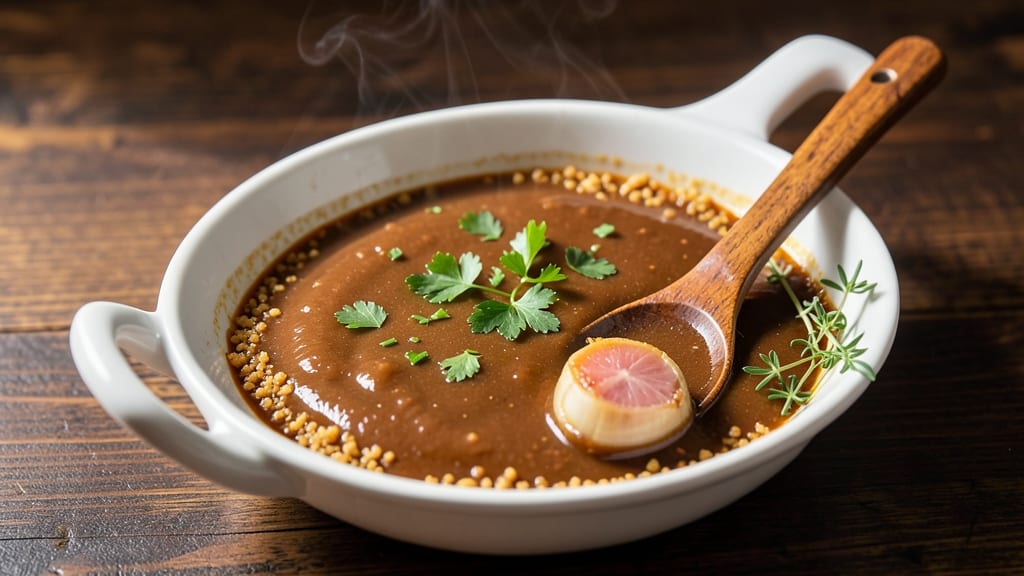
This au jus sauce recipe with beef broth transforms simple beef drippings into a rich, savory masterpiece that elevates every roast and steak. The secret lies in a slow reduction that intensifies natural umami flavors while keeping the process straightforward—no complicated techniques required.
I developed this recipe after years of testing, ensuring it delivers that perfect balance of depth and simplicity.
The foundation is high-quality beef broth, reduced with just a touch of vinegar for brightness and a splash of Worcestershire sauce for complexity. As it simmers, the sauce thickens slightly, creating a glossy finish that clings beautifully to meat.
The result? A sauce that's restaurant-worthy but achievable in your home kitchen, with minimal ingredients and just 20 minutes of active time.
What makes this sauce truly special is its versatility. Use it as a dipping sauce for roasted potatoes, a drizzle over perfectly cooked steaks, or even as a base for gravy.
The rich, meaty flavor comes from the beef broth itself, while the reduction process concentrates those savory notes into every spoonful. It's the kind of sauce that makes ordinary beef dishes feel extraordinary.
For an extra layer of flavor, finish with fresh herbs or a sprinkle of black pepper—just enough to enhance without overpowering. This recipe proves that professional-quality sauces don't require fancy ingredients or complicated methods. Let's create something truly memorable with just a few simple steps.
Ingredients for au jus sauce recipe with beef broth
Nine essential ingredients transform simple beef drippings into restaurant-quality au jus sauce.
| Ingredient | Amount | Notes |
|---|---|---|
| High-Quality Beef Broth 🥩 | 4 cups | Homemade or premium store-bought |
| White Wine Vinegar 🍷 | ¼ cup | For brightness and acidity |
| Worcestershire Sauce 🍶 | 2 tbsp | For umami depth |
| Fresh Garlic Cloves 🧄 | 4 cloves | Minced for aromatic base |
| Fresh Thyme Sprigs 🌿 | 2 sprigs | Or 1 tsp dried thyme |
| Fresh Parsley Leaves 🌿 | ¼ cup | Chopped for fresh finish |
| Unsalted Butter 🧈 | 2 tbsp | For velvety texture |
| Diamond Crystal Kosher Salt 🧂 | ½ tsp | Adjust to taste |
| Freshly Ground Black Pepper 🌶️ | ¼ tsp | For subtle heat |
The beef broth serves as the foundation, so prioritize quality. Homemade broth yields the deepest flavor, but premium brands like Kettle & Fire or Pacific Foods deliver consistent results. Avoid low-sodium versions—they dilute the umami impact. For an extra layer of richness, reduce your own broth from beef bones or chuck roast scraps. The vinegar and Worcestershire sauce should be high-quality—cheap versions add bitterness rather than balance. Fresh garlic and thyme elevate the sauce beyond basic beef flavor, while the butter adds a luxurious mouthfeel.
No white wine vinegar? Red wine vinegar or apple cider vinegar work in a pinch, though white provides the cleanest acidity. Worcestershire sauce unavailable? Substitute 1 tbsp soy sauce plus 1 tsp fish sauce for umami depth. Fresh herbs can be swapped for dried—use one-third the amount of dried thyme or parsley. The butter can be omitted for a lighter sauce, but it creates that signature glossy finish. For a vegetarian version, replace Worcestershire with 1 tbsp soy sauce plus 1 tsp mushroom powder, though the umami won't be identical.
Store finished sauce in an airtight container in the refrigerator for up to 5 days, where flavors continue to meld. For longer storage, freeze in ice cube trays—thaw quickly in a saucepan over low heat. Reheat gently to preserve texture, adding a splash of water if it thickens too much. This sauce reheats beautifully, making it perfect for meal prep. Double the batch—it disappears faster than you'd expect, especially when paired with roasted potatoes or steak fries.
Why You'll Love This Recipe
- Pantry Magic: I swear by this sauce because it’s the kind of thing I can pull off with ingredients I already own. No last-minute grocery runs—just beef broth, a splash of vinegar, and a few pantry staples. The Worcestershire and thyme add depth without extra effort, and honestly? It’s my lazy-day hero.
- Deep Umami Punch: That first sip of reduced broth with garlic and thyme? It’s like a flavor explosion. The white wine vinegar cuts through the richness while the Worcestershire brings this unexpected savory depth—bright enough to wake up a simple steak or roast, but rich enough to feel special. (Yes, even on a Tuesday night.)
- Leftovers That Shine: I make a big batch because this sauce only gets better as it sits. The flavors meld overnight, and I use it for everything—dipping fries, glaze for meatballs, or even a quick pan sauce. Between us, I’ve turned a $3 bottle of broth into a week’s worth of meals. That’s efficiency.
- Weeknight Flexibility: This isn’t just for fancy dinners. I’ll throw it together after work to toss with seared chicken thighs or drizzle over mashed potatoes. The garlic and thyme infuse the broth so fast (10 minutes, tops), and the vinegar keeps it from being heavy. My kids call it “the magic sauce”—because it is.
Step-by-step instructions for crafting au jus sauce
This method delivers a velvety, umami-rich sauce that elevates roasts and steaks to restaurant quality.
Mince Aromatics and Bloom the Butter
Peel and finely mince the 4 cloves fresh garlic cloves using a chef's knife or garlic press. Remove the 2 sprigs fresh thyme sprigs from their stems and chop them into small pieces. In a medium saucepan, melt the 2 tablespoons unsalted butter over medium-low heat until it foams but doesn't brown. Add the garlic and thyme immediately—they'll cook in just 30 seconds before releasing their aromatic oils.
This quick cooking prevents bitterness in the garlic while allowing the thyme to infuse the butter with its earthy notes. Watch the pan closely; garlic burns faster than you might expect. Once fragrant, remove the pan from heat and set aside temporarily—we'll return to it after building the sauce base.
Build the Sauce Foundation
Return the saucepan to medium heat and add the 4 cups high-quality beef broth and 0.25 cup white wine vinegar. Bring to a gentle simmer, then reduce heat to maintain a barely perceptible bubble at the surface. Add the 2 tablespoons Worcestershire sauce and stir to combine. The vinegar will brighten the sauce while the Worcestershire adds that essential umami depth.
Simmer uncovered for 10 minutes to allow flavors to meld. You'll notice the liquid reduces slightly and develops a deeper, more concentrated aroma. This reduction step is crucial—it intensifies the beefy flavor without making the sauce overly thick. Skim off any foam that rises to the surface during this time for a cleaner finish.
Season and Finish with Fresh Herbs
Remove the sauce from heat and stir in the 0.5 teaspoon diamond crystal kosher salt and 0.25 teaspoon freshly ground black pepper. Add the 0.25 cup fresh parsley leaves, chopped finely. The parsley should be added last to maintain its bright, fresh flavor rather than letting it cook down in the hot liquid.
For maximum freshness, I like to pulse the parsley in a food processor briefly before adding it. This creates a fine, even distribution without overpowering the delicate sauce. Taste and adjust seasoning—you may need a touch more salt to balance the acidity from the vinegar, especially if you're using a low-sodium broth.
Strain and Serve Warm
Line a fine-mesh strainer with cheesecloth or a coffee filter to create a makeshift filter. Pour the sauce through this setup to remove any thyme stems or garlic particles that might make the sauce gritty. Discard the solids and return the filtered sauce to the saucepan.
Return the sauce to low heat and stir in the butter you set aside earlier. The butter will melt into the sauce, creating a silky texture that coats the back of a spoon. Serve immediately over roasted meats or steaks, allowing the diner to spoon the sauce over each bite for maximum flavor impact. This sauce keeps well in the refrigerator for 3 days and reheats beautifully—just warm through gently on the stove.
Pro Tips For Making Au Jus Sauce Recipe With Beef Broth
- Simmer, Don’t Boil: After burning the garlic in my first three attempts, I learned to keep the heat at a gentle simmer—not even a rolling boil. The moment the broth hits a steady, tiny bubble at the edges, you’re golden. Fresh garlic cloves should perfume the sauce, not turn into bitter charcoal.
- Mince Garlic Like You Mean It: I used to toss in whole cloves and wonder why the flavor was weak. For this sauce, finely mince the garlic—almost into a paste—so it dissolves completely. No one wants to bite into a clove while sipping their au jus.
- Balance the Vinegar Early: Adding white wine vinegar too late makes the sauce taste harsh. Taste as you go—start with half the amount listed, simmer for 3 minutes, then adjust. You’re aiming for brightness, not a punch to the throat.
- Strain the Broth—Unless You Like Sediment: I skipped this step once and served the sauce with visible thyme stems. Strain it through a fine-mesh sieve into a clean pot, then return it to the heat. Your guests will notice the difference—even if you don’t.
Wine and beer pairings for this au jus sauce recipe with beef broth
Red Wine Pairings
For this rich au jus sauce, I reach for Cabernet Sauvignon from Napa Valley—its bold tannins and dark fruit notes stand up beautifully to the beefy depth. A 2018 Robert Mondavi Reserve (around $35) is my go-to; it balances the sauce's umami without overpowering it.
The wine's acidity cuts through the sauce's richness, while its oak notes complement the butter's velvety finish. 🍷
Malbec for Bold Flavor
If you prefer something with more body, try a Argentinian Malbec like Catena Zapata. The wine's dark plum and blackberry flavors echo the sauce's meaty essence, while its smooth finish prevents the dish from feeling heavy.
I've found that Malbecs from Mendoza (around $25-$40) work exceptionally well with this sauce, especially when paired with grilled steaks.
Light Beer Options
For beer lovers, a crisp Belgian Witbier like Hoegaarden offers a refreshing contrast. The citrusy notes and subtle spice from coriander brighten the dish, while the effervescence cleanses the palate between bites.
Alternatively, a German Pilsner such as Warsteiner provides a lighter, more neutral backdrop that lets the sauce shine. 🍺
Dark Beer Pairings
If you're serving hearty beef dishes like pot roast, a German Dunkel or American Amber Ale adds depth. I love Weihenstephaner Hefeweissbock for its malty sweetness, which complements the sauce's umami.
For a bolder option, try Fat Tire Amber Ale—its caramel and toasted malt notes harmonize perfectly with the au jus.
Non-Alcoholic Options
Don't overlook sparkling water with a splash of lemon juice and a pinch of salt for a refreshing alternative. For something more substantial, try ginger beer like Feather Ginger—its spicy kick enhances the sauce's savory profile.
A cucumber-lime soda also works well, especially with lighter beef dishes like steak tartare.
Wine Storage Tips
Store opened wine bottles horizontally in the fridge for up to 3 days to preserve freshness. For red wines, decant for 30-60 minutes before serving to soften tannins. I always keep a vacuum-sealed wine preserver on hand to extend opened bottles' life.
For beer, transfer leftovers to a sealed container within 2 hours of opening to maintain carbonation. 💡
Nutrition facts
Frequently asked questions
Can I make this au jus sauce without wine vinegar?
Swap the white wine vinegar for red wine vinegar or apple cider vinegar—both add brightness. For a tangier profile, try balsamic vinegar (use half the amount) or even lemon juice (reduce to 1 tablespoon since it's more acidic). The key is balancing the richness of the beef broth with acidity to keep the sauce vibrant.
How do I prevent the sauce from getting too thick?
If your sauce thickens too much during reduction, simply add 1-2 tablespoons of warm water or beef broth and stir until smooth. For a glossy finish, keep the heat at a gentle simmer rather than boiling—this helps maintain the right consistency. If using store-bought broth, check for added thickeners like cornstarch, which can alter the texture.
Can I use this sauce for dishes other than beef?
While this au jus sauce is designed for beef, its rich umami flavor works beautifully with lamb chops, venison, or even mushroom-based dishes like portobello steaks. For vegetarian options, substitute the Worcestershire sauce with soy sauce plus mushroom powder and use vegetable broth instead. The sauce's depth makes it versatile beyond traditional meat pairings!
What's the best way to reheat leftover au jus sauce?
Reheat gently in a saucepan over low heat, stirring occasionally. If the sauce thickens too much, add a splash of beef broth or water to restore its original consistency. Avoid microwaving—it can create a skin and alter the texture. For best results, reheat only until warmed through, then finish with a fresh sprinkle of parsley to brighten the flavors.
Why does my au jus sauce taste bitter?
Bitterness usually comes from overcooking the garlic or using low-quality ingredients. Always cook garlic just until fragrant (30 seconds) over low heat. For a smoother flavor, strain the sauce through a fine-mesh sieve to remove any cooked garlic particles. If using store-bought broth, opt for a premium brand—cheap versions often contain bittering agents. A pinch of sugar or honey can also help balance unwanted bitterness.