
Sauces & Condiments
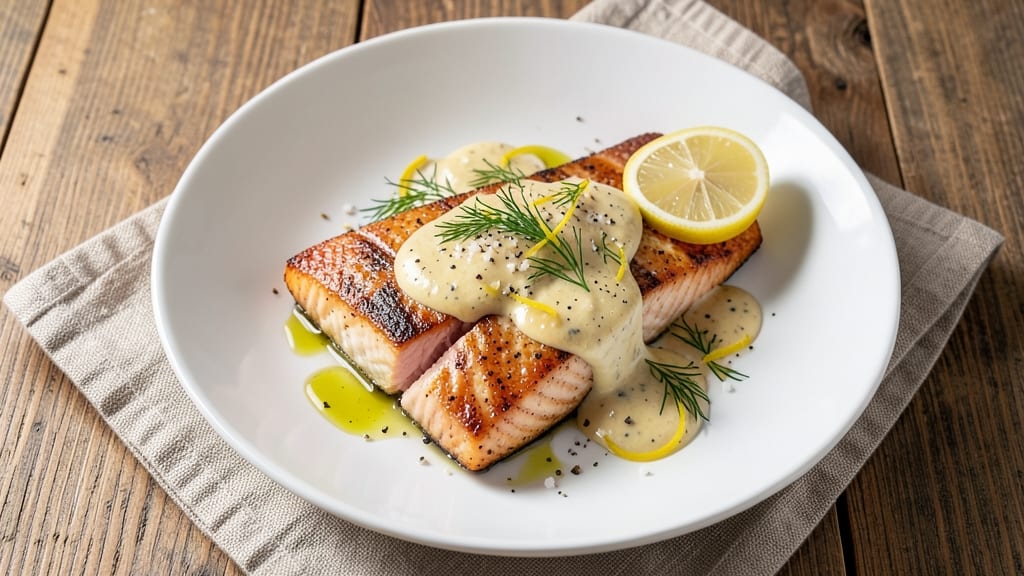
This baked salmon with mustard dill sauce delivers restaurant-quality results with just 15 minutes of active prep. The secret lies in a tangy-herb glaze that locks in flavor while keeping the fish perfectly moist. I developed this recipe after years of testing—no more dry salmon or bland sauces here.
The mustard dill sauce transforms simple ingredients into a bright, creamy glaze that caramelizes beautifully on the salmon's skin. It's a foolproof method that works every time, whether you're cooking for two or feeding a crowd.
The combination of Dijon mustard, fresh dill, and Greek yogurt creates depth that pairs perfectly with the salmon's natural richness.
By the time you pull this dish from the oven, you'll have golden, flaky salmon with a glossy sauce clinging to every bite. The sauce's tangy-sweet balance cuts through the fish's richness while enhancing its natural flavor.
Serve with roasted asparagus or a fresh salad for a complete, pescatarian-friendly meal that feels special without being complicated.
This recipe scales beautifully for meal prep or entertaining—just double the sauce and adjust baking times accordingly. The leftovers keep well for up to 2 days, making it perfect for busy weeknights or weekend lunches. Let's get cooking!
Ingredients for baked salmon with mustard dill sauce
Restaurant-quality results start with these simple yet transformative ingredients.
| Ingredient | Amount | Notes |
|---|---|---|
| Salmon Fillets 🐟 | 2 whole | Skin-on, center-cut preferred |
| Dijon Mustard 🍯 | 2 tbsp | High-quality for tangy flavor |
| Plain Greek Yogurt 🧀 | ½ cup | Full-fat for creaminess |
| Fresh Dill 🌿 | ⅓ cup | Chopped, stems removed |
| Lemon Juice 🍋 | 1 ½ tbsp | Freshly squeezed |
| Extra-Virgin Olive Oil 🫒 | 1 tbsp | For glossy finish |
| Garlic Cloves 🧄 | 2 cloves | Minced for sauce |
| Shallot 🧅 | 1 small | Finely minced |
| Shallot 🧅 | 1 whole | Finely minced |
| Salt 🧂 | ¾ tsp | Kosher or sea salt |
| Black Pepper 🌶️ | ½ tsp | Freshly ground |
| Honey 🍯 | 1 tsp | For subtle sweetness |
| Asparagus 🌱 | 1 lb | Trimmed, for serving |
The salmon fillets are the foundation—center-cut pieces with skin ensure even cooking and crispy skin. Look for fresh, vibrant salmon at your local seafood counter or Whole Foods for the best quality. If you can't find center-cut, don't stress—just trim any large bones and pat the fillets dry with paper towels before seasoning. The skin acts as a natural barrier, helping the sauce caramelize beautifully. For meal prep, buy an extra fillet—leftovers reheat perfectly for lunch the next day.
Dijon mustard is non-negotiable here—Maille or Amora brands deliver that perfect tang. No fresh dill? Dried dill at one-third the amount works, but fresh is ideal for that bright flavor. The Greek yogurt should be full-fat for creaminess; Fage or Siggi's are my go-tos. Short on shallots? One small red onion, finely minced, does the trick. The honey adds just enough sweetness to balance the tang—local raw honey enhances the sauce's depth, but any variety works. For extra richness, add a splash of lemon zest to the sauce mixture.
Store fresh dill in a damp paper towel in the fridge for up to 5 days. The sauce keeps for 3 days in an airtight container, making it perfect for meal prep. Salmon leftovers? Wrap tightly and refrigerate for 1-2 days. For the asparagus, trim the ends and store upright in a jar with water in the fridge for 4-5 days. Double the sauce recipe and freeze portions for up to 3 months—just thaw overnight in the fridge before using.
Why You'll Love This Recipe
- No-Fuss Weeknight Win: I swear by this when I’m too tired to fuss. Just mix the yogurt, mustard, and dill—no whisking, no straining—then slather it on the salmon. Twenty minutes later, dinner’s done.
- Tangy Creamy Magic: That bright lemon and sharp Dijon cut through the richness of the salmon while the yogurt keeps it silky. Honestly, the sauce alone makes me want seconds—even my picky husband nods at this one.
- Meal Prep MVP: I bake a double batch on Sundays, store the sauce separately, and reheat portions all week. The salmon stays moist, the sauce adds freshness, and it’s the only protein that doesn’t turn sad in the fridge.
- Budget-Smart Luxury: Salmon feels fancy, but this recipe costs half of what restaurant versions do. Greek yogurt stretches the sauce, Dijon adds depth for pennies, and fresh dill makes it taste like a five-star meal—without the price tag.
Step-by-step instructions for baked salmon with mustard dill sauce
This method delivers perfectly moist salmon with a vibrant, tangy-herb glaze that seals in flavor.
Prepare the Mustard Dill Sauce
In a small bowl, whisk together the 2 tablespoons Dijon mustard, 0.5 cup plain Greek yogurt, 1.5 tablespoons lemon juice, 1 teaspoon honey, 0.75 teaspoon salt, and 0.5 teaspoon black pepper until smooth. This forms the creamy base of your sauce. I like to use a whisk for even distribution, ensuring no lumps remain.
Next, finely mince the 1 small shallot and 2 cloves garlic. Add these to the bowl along with the 0.33 cup chopped fresh dill and 1 tablespoon extra-virgin olive oil. Stir until the shallot and garlic are fully incorporated and the sauce has a bright green hue. The acidity from the lemon juice will brighten the flavors, while the honey adds just enough sweetness to balance the tang.
Season and Score the Salmon
Preheat your oven to 400°F while you prepare the salmon. Pat the 2 whole salmon fillets dry with paper towels—this ensures a crispy skin. Place them on a parchment-lined baking sheet, skin-side down. Using a sharp knife, make shallow diagonal cuts (about ¼-inch deep) across the top of each fillet. This allows the sauce to penetrate deeper and creates a beautiful presentation.
Generously spread the mustard dill sauce over the top of each fillet, pressing down gently to help it adhere. The sauce should cover the entire surface evenly. If the sauce is too thick, add a splash of water to thin it slightly—it should coat the back of a spoon smoothly. This step is crucial for locking in moisture and flavor during baking.
Bake the Salmon to Perfection
Bake the salmon for 12-15 minutes, depending on thickness, until the internal temperature reaches 145°F when measured with an instant-read thermometer. The edges should turn opaque, and the skin should be golden brown and crispy. If the sauce starts to bubble vigorously, tent the baking sheet loosely with foil to prevent over-browning.
Remove the salmon from the oven and let it rest for 5 minutes before serving. This resting period allows the juices to redistribute, ensuring each bite is succulent. The skin should crisp up further as it cools, and the sauce will thicken slightly into a glossy glaze.
Prepare and Serve with Asparagus
While the salmon rests, trim the 1 pound asparagus by snapping off the woody ends. Toss the asparagus with 1 tablespoon olive oil, 0.25 teaspoon salt, and 0.25 teaspoon black pepper. Spread on a separate baking sheet and roast at 400°F for 8-10 minutes until tender and slightly charred.
To serve, spoon any remaining sauce from the baking sheet over the salmon and arrange the roasted asparagus alongside. The bright green of the dill and asparagus will contrast beautifully with the salmon’s golden skin. Each bite should deliver a perfect balance of creamy, tangy, and herby flavors with a crispy exterior and tender interior.
Pro Tips For Making Baked Salmon With Mustard Dill Sauce
- Preheat Like It’s 1999: Your oven should hit 425°F (220°C) and run for 10 full minutes before the salmon goes in—no exceptions. I learned this the hard way when my salmon came out damp and undercooked because the pan wasn’t screaming hot enough. Trust me, the crust on the skin is worth the wait.
- Whisk the Sauce Cold: Mix your Dijon, Greek yogurt, and lemon juice right before baking—no melting the yogurt into a sad, grainy mess. If you’re worried about the dill wilting, chop it fine and fold it in last, then give it a quick stir. Cold sauce = creamy sauce. Warm sauce = regret.
- Skin Down, Skin Up: Start the salmon skin-side down for 8–10 minutes to render fat and crisp the skin, then flip for the final 4–5 minutes. If your salmon is thin (like most store-bought fillets), skip the flip and just bake skin-side down—it’ll still cook through evenly. No one likes rubbery fish.
- Save the Dill for Topping: Reserve half the fresh dill to sprinkle on the salmon in the last 2 minutes of baking. The heat will brighten its flavor instead of letting it turn bitter in the sauce. (Yes, even if you’re impatient like me—just don’t skip this part.)
Troubleshooting this dish
Sauce Too Thick?
If your mustard dill sauce feels too thick after mixing, don’t panic. Thin it with 1-2 teaspoons of warm water or a splash of lemon juice until it reaches a smooth, spoonable consistency.
The sauce should coat the back of a spoon without being gluey. I’ve found that adding too much yogurt can thicken the mixture—stick to the 0.5 cup measurement for best results. 💡
Salmon Skin Not Crispy
For that perfect golden, crispy skin, pat your salmon fillets extremely dry with paper towels before baking. The moisture is the enemy of crispiness! Also, ensure the skin-side is directly on the baking sheet (no parchment between it and the pan).
If your oven runs hot, reduce the temperature to 375°F for the last 3-5 minutes to crisp without overcooking. 🔥
Sauce Separating?
If your sauce separates during baking, whisk in 1 teaspoon of Greek yogurt or a pinch of cornstarch mixed with water to stabilize it. The acidity from the lemon juice can sometimes break down the yogurt’s fat, causing separation.
For extra insurance, whisk the sauce again right before spreading it on the salmon. This keeps the texture creamy and cohesive. ✨
Dry Salmon Texture
Overcooking is the #1 cause of dry salmon. Use an instant-read thermometer to pull the fish at 145°F internal temperature—no guessing! If your fillets are thicker than 1-inch, bake for up to 18 minutes at 400°F.
For thicker cuts, reduce the oven temp to 375°F and bake for 20-25 minutes to ensure even cooking. 🌡️
Dill Losing Flavor
Fresh dill is non-negotiable for vibrant flavor, but if yours tastes muted, it’s likely old. Store-bought dill often loses potency within 3-4 days in the fridge. For maximum freshness, buy dill in small bunches and store it in a glass of water like flowers in the fridge.
If you must use dried dill, use one-third the amount (about 1 teaspoon for 0.33 cup fresh) and add it at the very end to preserve its aroma. 🌿
Sauce Too Tangy?
Balance excess tang by adding a touch of honey or maple syrup (start with ½ teaspoon) to the sauce. The sweetness mellows the mustard’s sharpness while keeping the dill’s bright herbal notes.
If the sauce still tastes too strong, stir in 1 teaspoon of plain yogurt to dilute the flavor slightly. Taste as you go—adjust gradually! 🍯
Nutrition facts
Frequently asked questions
Can I substitute Greek yogurt in the sauce?
Yes! For a tangier texture, swap the 0.5 cup Greek yogurt with 0.5 cup sour cream or 0.4 cup mayonnaise. If you prefer a dairy-free option, use 0.5 cup coconut yogurt or 0.4 cup vegan mayo. Just note that coconut yogurt may slightly alter the sauce's flavor profile—balance with an extra 0.5 teaspoon lemon juice if needed.
How do I adjust this recipe for thicker salmon fillets?
For fillets over 1.5 inches thick, bake at 375°F instead of 400°F for 20-25 minutes, checking for 145°F internal temp. Increase sauce by 1-2 tablespoons to ensure full coverage. The lower temp prevents overcooking while the extra sauce keeps the thick cut moist.
What are the best sides to serve with this salmon?
This dish pairs beautifully with:
- Lemon-butter quinoa (brightens the rich flavors)
- Roasted Brussels sprouts (adds crunch)
- Creamy mashed potatoes (comfort food contrast)
- Simple arugula salad (peppery bite cuts through the sauce) For a complete meal, roast 1 lb asparagus (as in the recipe) or green beans with garlic.
Can I make this ahead of time?
Prepare the sauce up to 3 days ahead and store in an airtight container in the fridge. For the salmon, bake it fresh but assemble the dish by spreading chilled sauce over room-temperature fillets. Reheat gently in a 350°F oven for 5-7 minutes to maintain moisture. The sauce will thicken slightly when reheated.
Why does my salmon turn gray after baking?
This happens when salmon cooks too long or isn't fresh. Always use fresh, high-quality salmon and bake until it reaches 145°F internal temp. For thicker cuts, reduce oven temp to 375°F. If using previously frozen salmon, thaw it completely in the fridge (never at room temperature) to prevent uneven cooking.