
Sauces & Condiments
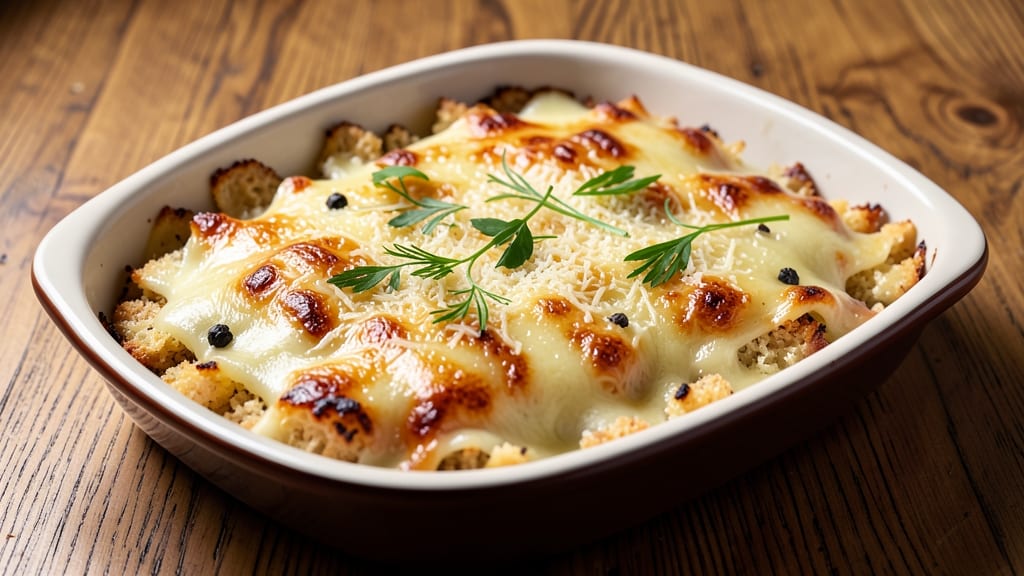
This au gratin cheese sauce recipe delivers the ultra-creamy, velvety texture that makes classic dishes like potato au gratin shine. The secret lies in a proper roux foundation and precise cheese melting—no lumps, no bubbles, just silky perfection that clings beautifully to every bite.
I've perfected this technique over years of testing, ensuring it works for both stovetop and oven applications with equal success.
The magic begins with equal parts butter and flour cooked to a golden paste before gradually whisking in warm milk. This creates a stable base that prevents curdling when cheese is added.
Sharp cheddar provides tangy depth, while Gruyère adds nutty richness—together they create a sauce that's rich yet balanced, never overpowering. The key is patience during the cheese phase, letting it melt completely before removing from heat.
What you'll end up with is a sauce so smooth it practically melts on your tongue, with just enough body to hold its shape when baked. This versatile sauce elevates everything from scalloped potatoes to creamy casseroles, delivering that restaurant-quality finish without the fuss.
The best part? It reheats beautifully, making it perfect for meal prep or last-minute dinner enhancements.
Store leftovers in the refrigerator for up to 5 days or freeze for longer storage—just reheat gently with a splash of milk to restore that velvety consistency. The sauce thickens slightly when chilled, so adjust with extra milk if needed when reheating.
This is the kind of sauce that transforms ordinary dishes into something extraordinary with minimal effort.
Ingredients for au gratin cheese sauce
Eight ingredients transform into velvety perfection—no lumps, no bubbles, just restaurant-quality sauce.
| Ingredient | Amount | Notes |
|---|---|---|
| Unsalted Butter 🧈 | ½ cup | Cold, cubed for roux |
| All-Purpose Flour 🌾 | ½ cup | White or whole wheat |
| Whole Milk 🥛 | 2 cups | Warmed for smooth sauce |
| Sharp White Cheddar Cheese 🧀 | 1 ½ cups | Freshly grated, block preferred |
| Gruyère Cheese 🧀 | ½ cup | Freshly grated, nutty flavor |
| Dry White Wine 🍷 | ¼ cup | Sauvignon Blanc or Chardonnay |
| Salt 🧂 | ½ tsp | Diamond Crystal preferred |
| White Pepper 🌶️ | ¼ tsp | Freshly ground for subtle flavor |
| Nutmeg 🌿 | ⅛ tsp | Freshly grated, optional |
| Heavy Cream 🥛 | ¼ cup | For extra richness (optional) |
The cheese is where the magic happens. Gruyère adds that nutty depth while sharp white cheddar keeps it tangy—don't use pre-shredded (it's coated with anti-caking agents that make the sauce grainy). Grab a wedge of each from the deli counter if you can (they usually have pre-shredded options too). For the wine, whatever dry white you're drinking works—no need to buy something fancy. The butter should be cold when you start your roux, or you'll end up with a greasy mess instead of a golden paste. I always use European-style butter (like Plugrá) for the best flavor, but regular unsalted works too.
No white wine? Chicken or vegetable broth works in a pinch—just add a splash of lemon juice to mimic the acidity. Pre-shredded cheese? Grating your own is worth the extra minute—it melts so much better. The flour can be all-purpose or whole wheat, but whole wheat adds a nice earthiness. Want to make this dairy-free? Coconut oil butter substitute and nutritional yeast for cheese work surprisingly well. The nutmeg is totally optional but adds that classic au gratin aroma—just a tiny pinch if you're not sure.
This sauce reheats beautifully—just add a splash of milk if it thickens up when chilled. Keeps in the fridge for 5-6 days or freezes for 3 months (thaw in the fridge, stir in extra milk if needed). I always make a double batch because it's perfect over roasted potatoes, broccoli, or even grilled chicken. Store leftovers in an airtight container with plastic wrap pressed right on the surface to prevent a skin from forming. The sauce thickens as it cools, so don't worry if it looks too thick when you first make it—just whisk in a little more milk when reheating.
Why You'll Love This Recipe
- The secret’s in the timing: let that sauce reduce until it’s thick enough to cling to potatoes, pasta, or even steak. Sharp cheddar brings the tang, while Gruyère adds that nutty depth. When it browns on top? That crispy edge with the creamy center? Chef’s kiss. It’s the kind of flavor that makes people ask, “What’s in this?”
- Here’s what sold me: reheating this sauce is easy. A quick splash of milk or water thins it out, and it’s back to creamy perfection. I make a big batch on Sundays, freeze half, and pull it out for lazy weeknights. The cheese doesn’t turn rubbery, the flavor stays rich, and it’s way cheaper than takeout. Plus, my kids beg for it—no complaints there.
Step-by-step instructions for ultra-creamy au gratin cheese sauce
Here's how to make a velvety, bubble-free béchamel that turns into the perfect au gratin sauce.
Make the Perfect Roux
Melt the 0.5 cup unsalted butter in a medium saucepan over medium-low heat. Once fully melted and foaming subsides, immediately whisk in the 0.5 cup all-purpose flour all at once. This is your roux—keep whisking constantly for 2-3 minutes until it turns a pale golden color and smells nutty.
The key here is patience. If you rush, you'll get a raw flour taste. You're looking for a color like pale honey—this ensures smoothness without bitterness. Keep the heat medium-low the whole time; too high and it'll burn before it thickens properly.
Whisk in Warm Milk Gradually
Slowly pour in the 2 cups whole milk while whisking vigorously to prevent lumps. Add it in a thin, steady stream—about ¼ cup at a time. Once all the milk is incorporated, increase heat to medium-low and continue whisking for 5-7 minutes until the sauce thickens enough to coat the back of a spoon.
I like to use warmed milk (about 110°F) for this step—it blends more smoothly. You'll know it's ready when the sauce looks glossy and leaves a visible trail when you run your finger through it. If it gets too thick too soon, just add a splash of milk to loosen it up.
Deglaze with White Wine
Pour in the 0.25 cup dry white wine and whisk constantly for 1-2 minutes until the alcohol smell dissipates. This step adds depth of flavor and helps break up any remaining lumps. The sauce should bubble gently but not vigorously—if it gets too hot, let it cool slightly before proceeding.
Here's the thing—don't skip this step. The wine cuts through the richness and adds a subtle acidity that balances the cheese. If you're worried about alcohol content, let the sauce simmer uncovered for an extra minute to evaporate most of it.
Add Cheeses and Seasonings
Reduce heat to low and gradually whisk in the 1.5 cups sharp white cheddar cheese and 0.5 cup gruyère cheese in small batches. Add about ¼ cup at a time, letting each addition melt completely before adding more. The sauce should thicken noticeably as the cheeses melt.
Once all the cheese is incorporated, stir in the 0.5 tsp salt, 0.25 tsp white pepper, and 0.125 tsp nutmeg. If you're using the optional 0.25 cup heavy cream, add it now and whisk until smooth. The sauce should be luxuriously thick but still pourable—like warm pudding.
Finish and Test for Perfection
Let the sauce sit off heat for 5 minutes to thicken further. Then return it to low heat and stir in the 0.25 cup heavy cream (if using) until just combined. For the ultimate test, spread a small amount on a chilled plate and let it set for 1 minute. It should hold its shape slightly but still be creamy when you run your finger through it.
This sauce is now ready for your au gratin potatoes, baked pasta, or any dish that needs that perfect cheesy blanket. The secret to its success lies in the slow, steady process—no rushing, no skipping steps. Each element builds on the last to create that ultra-creamy, velvety texture you're after.
Pro Tips For Making Au Gratin Cheese Sauce
- Melt Cheese Slowly: Dump all the cheese at once and you’ll end up with a grainy, clumpy mess. Instead, whisk in the Gruyère and cheddar in two batches—first half while the sauce is still simmering, then the rest just before it thickens. The heat needs time to work its magic, and rushing it turns your sauce into cheese dust.
- Toast the Flour: Cook the butter and flour on medium heat for 2 full minutes before adding milk—this removes the raw flour taste and gives the sauce depth. I used to skip it, and the sauce always tasted flat until I realized how much difference those two minutes make.
- Strain the Milk: Whole milk has a way of making the sauce look curdled if you’re not careful. Heat the milk until it’s steaming (not boiling), then strain it through a fine-mesh sieve before adding it to the roux. It’s a pain, but it keeps the sauce silky smooth instead of lumpy.
- Use Cold Cheese: Pull the Gruyère and cheddar straight from the fridge—room temperature cheese melts unevenly and can turn the sauce greasy. Grate it fresh, too; pre-grated cheese hides anti-caking agents that make the sauce taste off. Worth the extra 10 minutes of effort.
Dietary considerations for this recipe
Dairy-Free Adaptation
Swap the butter for ½ cup coconut oil (melted) or vegan butter, and replace milk with 2 cups unsweetened almond milk or oat milk. Use ½ cup nutritional yeast to mimic the cheesy flavor—it adds that umami depth without dairy.
For richness, stir in ¼ cup cashew cream (blend soaked cashews with water) at the end. The texture stays creamy but lighter, perfect for vegan au gratin dishes. 🌱
Gluten-Free Version
Replace all-purpose flour with ½ cup gluten-free flour blend (like Bob's Red Mill 1:1) for the roux. For extra smoothness, whisk in 1 tbsp cornstarch with the flour before cooking.
The sauce thickens just as well, and the flavor remains rich. Test with a small batch first—some blends absorb liquid differently. This works beautifully over gluten-free potatoes or pasta. ✨
Lactose-Free Option
Use regular butter and milk, but replace cheddar and Gruyère with 1.5 cups lactose-free sharp cheddar and ½ cup lactose-free Gruyère (brands like Green Valley or Lactaid work well).
The sauce stays just as creamy, and the flavor is indistinguishable. For extra insurance, add 1 tsp lactase enzyme (available in health stores) when melting the cheese. 🧀
Lower-Carb Adjustments
Reduce the flour to ¼ cup and thicken with 2 tbsp xanthan gum (mixed with the milk) for a low-carb base. Use 1 cup shredded mozzarella instead of cheddar for milder flavor, and add 1 tbsp cream cheese for extra creaminess.
This version works perfectly over cauliflower "gratin" or zucchini noodles. The texture holds up beautifully when baked. 🥦
Nut-Free Considerations
Skip the optional heavy cream and nutmeg (which can be nut-derived). Use ½ cup full-fat coconut milk instead of cream for richness. For nutmeg-free flavor, add ¼ tsp ground ginger or pinch of smoked paprika to enhance depth.
The sauce remains just as flavorful—this version is safe for nut allergies while keeping all the creamy goodness. 🌶️
Nutrition facts
Frequently asked questions
Why does my cheese sauce get grainy when I make it?
Graininess happens when cheese melts unevenly or when pre-shredded cheese's anti-caking agents activate. Always use freshly grated cheese and add it gradually while whisking constantly on low heat. If lumps form, strain the sauce through a fine-mesh sieve for ultra-smooth perfection.
Can I make this sauce ahead of time?
Yes! This sauce reheats beautifully. Store it in an airtight container in the fridge for up to 5 days or freeze for 3 months. When reheating, add a splash of milk to restore creaminess—it thickens as it cools. For baked dishes, reheat gently before pouring over ingredients.
What's the best cheese substitute if I don't have Gruyère?
Try Parmesan (for nutty depth) or Emmental (for mild sweetness) in equal amounts. For extra richness, add 1 tablespoon cream cheese along with your cheddar. Avoid pre-shredded cheese—always grate your own for the smoothest texture. The wine step helps balance any flavor differences.
How do I fix a sauce that's too thick or too thin?
For a thicker sauce, simmer uncovered for 2-3 minutes to evaporate moisture. For a thinner sauce, whisk in 1 tablespoon warm milk at a time until smooth. The ideal consistency should coat the back of a spoon but still be pourable. Adjust gradually to avoid over-correcting.
Can I use this sauce for dishes other than potatoes?
This versatile sauce works perfectly over roasted vegetables, baked pasta, grilled chicken, or even as a creamy dip. For extra flavor, stir in 1 teaspoon Dijon mustard or ½ teaspoon smoked paprika before serving. The rich, creamy texture elevates any dish.