
Sauces & Condiments
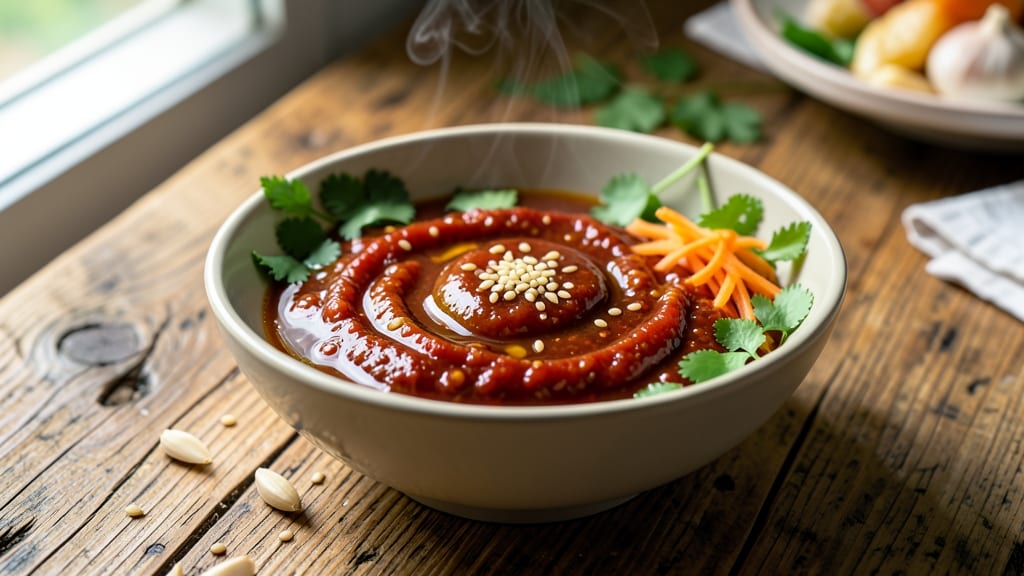
This Asian chilli sauce recipe delivers the perfect balance of fiery heat and sweet tang that elevates everything from dumplings to grilled meats. The secret lies in simmering fresh aromatics with vinegar and sugar until the flavors meld into a glossy, versatile sauce that's ready in just 20 minutes.
I developed this version after testing countless store-bought options—none compare to the depth of homemade.
The magic happens when garlic, ginger, and chilli peppers caramelize slightly in the vinegar base, creating layers of flavor that store-bought versions can't match. A touch of sugar balances the heat while preserving that signature Asian tang, and a final blend ensures a smooth, restaurant-quality consistency.
What you'll end up with is a sauce that's equally at home drizzled over noodles or used as a marinade for skewers.
What makes this recipe truly professional is its adaptability—adjust the chilli level to your preference by adding more or less paste, and let it sit overnight for even deeper flavor development.
The sauce keeps for up to two weeks in the refrigerator, making it perfect for meal prep or gifting. Once you taste the difference, you'll never go back to bottled versions.
Whether you're serving up spring rolls, grilling shrimp, or just need a quick dipping sauce, this chilli sauce transforms ordinary dishes into something extraordinary. The process is straightforward, but the results are anything but basic—this is the kind of sauce that turns good meals into memorable ones.
Let's get started on making yours.
Ingredients for asian chilli sauce
Nine simple ingredients crafting bold, restaurant-quality Asian chilli sauce in minutes.
| Ingredient | Amount | Notes |
|---|---|---|
| Red Chili Paste 🌶️ | ½ cup | High-quality, like Mae Ploy or Sambal Oelek |
| Rice Vinegar 💧 | ½ cup | White or seasoned, not apple cider |
| Brown Sugar 🍯 | ¼ cup | Light or dark, packed firmly |
| Garlic Cloves 🧄 | 6 cloves | Fresh, peeled, minced finely |
| Fresh Ginger 🌿 | 2 tbsp | Finely grated, not powdered |
| Sesame Oil 🫒 | 1 tbsp | Toasted, not flavored |
| Soy Sauce 🍶 | 2 tbsp | Light or all-purpose |
| Water 💧 | ¼ cup | Room temperature preferred |
| Salt 🧂 | ½ tsp | Kosher or sea salt |
| Black Pepper 🌶️ | ¼ tsp | Freshly ground preferred |
The chili paste is non-negotiable here—Mae Ploy or Sambal Oelek are my go-tos, but any high-quality brand works. Look for a deep red color and no added preservatives. Fresh ginger and garlic are worth the extra minute to mince finely—they caramelize beautifully in the vinegar. Trader Joe's and Asian markets have the best selection, but regular grocery stores usually carry the basics. If you can't find toasted sesame oil, regular works, but it'll lack that nutty depth. The brown sugar should be packed firmly—don't scoop it loosely or you'll end up with less sauce.
No rice vinegar? White vinegar or apple cider vinegar in a pinch, though the flavor will be slightly different. Short on chili paste? Fresh red chili peppers blended with a pinch of salt works, but you'll lose that smoky depth. The soy sauce can be swapped for coconut aminos if you're soy-free, though the color will be lighter. For a smoother sauce, blend everything after simmering. If you prefer it chunkier, leave the garlic and ginger slightly larger. The sesame oil is what ties everything together—don't skip it, even if you're not a fan of sesame flavor.
This sauce keeps beautifully—2 weeks in the fridge sealed in a jar. The flavors actually improve overnight, so make it a day ahead if you can. For longer storage, freeze in ice cube trays and transfer to a bag. Each cube makes a perfect single-serving portion. If it thickens too much after refrigerating, just stir in a splash of water. The sauce reheats well, but it's best served at room temperature for dipping. Double the batch—you'll want to make this again.
Why You'll Love This Recipe
- Five-Ingredient Magic: I swear by this combo—just chili paste, vinegar, sugar, garlic, and ginger. That’s it. No fancy gadgets, no stress, just a quick simmer while I chop veggies for dinner. Honestly, the hardest part is deciding how much heat to dial in.
- Sweet Heat Balance: The brown sugar cuts the chili’s kick just right, while the garlic and ginger add depth that lingers. It’s the kind of sauce where every spoonful makes you think, "Why haven’t I made this sooner?"—especially when it’s slathered on grilled chicken or tossed with noodles.
- Pantry Powerhouse: Between us, this sauce is my go-to for lazy nights, potlucks, or when I need to jazz up takeout. A splash in ramen, a drizzle over dumplings, or even a dip for spring rolls—it’s the unsung hero that turns basic meals into something special.
- Makes Leftovers Worth It: I always double the batch because it keeps for weeks in the fridge. That means fewer last-minute grocery runs and more time for the good stuff—like figuring out what to pair with it next. (Pro tip: It’s ridiculously good on deviled eggs.)
Step-by-step instructions for Asian chili sauce
Let's create a perfectly balanced sauce that delivers heat, sweetness, and umami in every bite.
Bloom the Aromatics in Sesame Oil
Heat a small saucepan over medium-low heat and add the 1 tablespoon sesame oil. Once the oil shimmers gently, add the 6 cloves minced garlic and 2 tablespoons grated fresh ginger. Cook for 1-2 minutes until the garlic becomes fragrant and just begins to turn golden—this prevents it from burning and releases its full flavor.
Here's the thing—ginger and garlic cook fast. Keep your eye on them and stir frequently. You want them aromatic but not browned. If they start to darken too quickly, reduce the heat slightly. This step sets the flavor foundation for your entire sauce.
Combine Wet Ingredients
Add the 0.5 cup red chili paste to the pan and stir continuously for 1 minute to distribute it evenly. The paste will darken slightly as it melts into the oil. Next, pour in the 0.5 cup rice vinegar and 2 tablespoons soy sauce, stirring to combine all ingredients.
Let the mixture simmer gently for 3-4 minutes until it begins to thicken slightly. You'll notice the sauce developing a glossy sheen and the raw vinegar smell transforming into something more complex. This is when the flavors start to meld together beautifully.
Add Sweetness and Season
Stir in the 0.25 cup brown sugar and 0.25 cup water until the sugar dissolves completely. Add the 0.5 teaspoon salt and 0.25 teaspoon black pepper, then continue simmering for another 4-5 minutes until the sauce thickens to your desired consistency.
You're looking for a sauce that coats the back of a spoon but still flows smoothly. If it thickens too much, you can add a splash more water to adjust the texture. Taste as you go—this is where you can balance the heat and sweetness to your preference.
Cool and Adjust
Remove the pan from heat and let the sauce cool slightly for 5 minutes. This cooling period allows the flavors to settle and makes it easier to taste and adjust. The sauce will thicken further as it cools, so don't worry if it looks slightly runny while hot.
Give it a final taste and adjust the balance if needed. Want more heat? Add a pinch of chili paste. Need more sweetness? Stir in a bit more brown sugar. The beauty of this sauce is its flexibility—you can tweak it to suit your exact taste preferences before using it.
Pro Tips For Making Asian Chilli Sauce
- Bloom the Chili Paste: Heat your red chili paste low and slow—no rushing—until it fragrant and slightly oily. I used to blast it on high and end up with a bitter, raw taste; simmering it for 3-4 minutes at medium-low lets the flavors open up properly.
- Peel and Mince Ginger: Skip the grater—fresh ginger loses moisture and turns watery when cooked. Use a sharp knife to mince it into tiny, even pieces; they’ll melt into the sauce without making it gloopy.
- Balance Heat Early: Taste the sauce before adding all the brown sugar. If it’s already too spicy, a splash of rice vinegar cuts through better than sugar—adding sweetness too late just masks the problem.
- Simmer, Don’t Boil: Keep the sauce at a gentle simmer—tiny bubbles, occasional swirls—never a rolling boil. Boiling burns the garlic and vinegar, turning the sauce harsh instead of bright and layered.
Regional styles of this recipe
Thai-Inspired Nam Prik
This Thai-style chilli sauce, called Nam Prik, swaps rice vinegar for fish sauce and lime juice, creating a more complex umami profile.
Use 1 tablespoon fish sauce (like Red Boat) and 2 tablespoons lime juice instead of rice vinegar, then add 1 tablespoon palm sugar or coconut sugar for that authentic Thai sweetness. The result is a tangier, funkier sauce perfect for dipping spring rolls or marinating grilled chicken. 🌶️
Japanese Shichimi Togarashi
For a Japanese-inspired version, replace the chili paste with 1 tablespoon shichimi togarashi (Japanese seven-spice blend) and add 1 teaspoon mirin to the vinegar mixture. This creates a nutty, toasty sauce with sesame seeds and orange zest—ideal for drizzling over ramen or tempura.
The texture will be slightly grainier, so blend it briefly for a smoother finish. Adjust salt to taste since shichimi is already salty. ✨
Vietnamese Nuoc Cham
Vietnamese Nuoc Cham (dipping sauce) uses fish sauce and sugar in a 1:1 ratio with lime juice. Replace the rice vinegar with 3 tablespoons fish sauce and 3 tablespoons lime juice, then add 1 tablespoon sugar.
Stir in 1 teaspoon minced shallot and ½ teaspoon black pepper for depth. This sauce is lighter and brighter, perfect for pho or fresh herbs. Serve it chilled for the best experience. 💫
Korean Gochujang Sauce
Swap the chili paste for 2 tablespoons gochujang (Korean fermented chili paste) and reduce the sugar to 1 tablespoon. Add 1 tablespoon honey and 1 teaspoon grated ginger for a sweeter, fermented depth.
This version pairs beautifully with bulgogi beef or kimchi pancakes. The sauce will have a thicker, almost paste-like consistency—adjust with water if needed. 🔥
Malaysian Sambal Belacan
For a Malaysian twist, blend ½ cup shrimp paste (belacan) with the chili paste and add 1 tablespoon tamarind paste instead of vinegar. This creates a bold, funky sauce with a deep umami punch.
Use it as a condiment for satay skewers or nasi lemak. The shrimp paste adds a rich, salty complexity that’s unmistakably Southeast Asian. 🌟
Chinese Chili Oil Adaptation
Transform this into a Chinese chili oil sauce by replacing the vinegar with ½ cup soy sauce and adding ¼ cup neutral oil (like avocado or vegetable oil). Simmer the oil with 1 teaspoon Sichuan peppercorns (lightly toasted) for a tingling finish.
This sauce is perfect for dumplings or noodles, where the oil adds richness. Strain out the peppercorns before serving if you prefer a smoother texture. 💡
Nutrition facts
Frequently asked questions
Can I make this chilli sauce without fresh garlic and ginger?
Use 1 teaspoon garlic powder and ½ teaspoon ground ginger instead, but reduce the salt slightly since powdered versions can be saltier. For best results, toast the spices in the sesame oil for 30 seconds to enhance their flavor. The sauce will still taste great, though fresh aromatics add depth that powder can't match.
How do I adjust the heat level if my chilli paste is too mild?
Start with the full ½ cup of chilli paste, then taste after simmering. If it's too mild, stir in ½ teaspoon cayenne pepper or an extra 1-2 teaspoons of chilli paste while warm. For a smoky kick, add ½ teaspoon smoked paprika. Remember, heat builds as the sauce cools, so adjust gradually.
Can I use this sauce as a marinade for meats?
Yes! This sauce works perfectly for marinating chicken, pork, or tofu. For best results, use ¼ cup sauce per pound of protein and marinate for 30 minutes to 2 hours in the fridge. The acidity in the vinegar helps tenderize, while the sweetness caramelizes during cooking. Reserve some sauce to drizzle over grilled meats at the end.
Why did my sauce separate or get grainy?
This usually happens if the sugar didn't dissolve completely or if you didn't stir enough during simmering. To fix it, blend the sauce briefly with an immersion blender or whisk vigorously. For future batches, ensure the sugar is fully dissolved by simmering longer or adding a splash of water. If using chilli paste with chunks, strain it first for a smoother texture.
How can I make this sauce vegan?
Replace the soy sauce with 2 tablespoons tamari or coconut aminos and use a vegan-friendly chilli paste (check for fish sauce). For extra umami, add 1 teaspoon mushroom powder or ½ teaspoon nutritional yeast. The brown sugar can stay as-is (it's plant-based), or swap for coconut sugar. The resulting sauce will have the same bold flavor profile!