
Sauces & Condiments
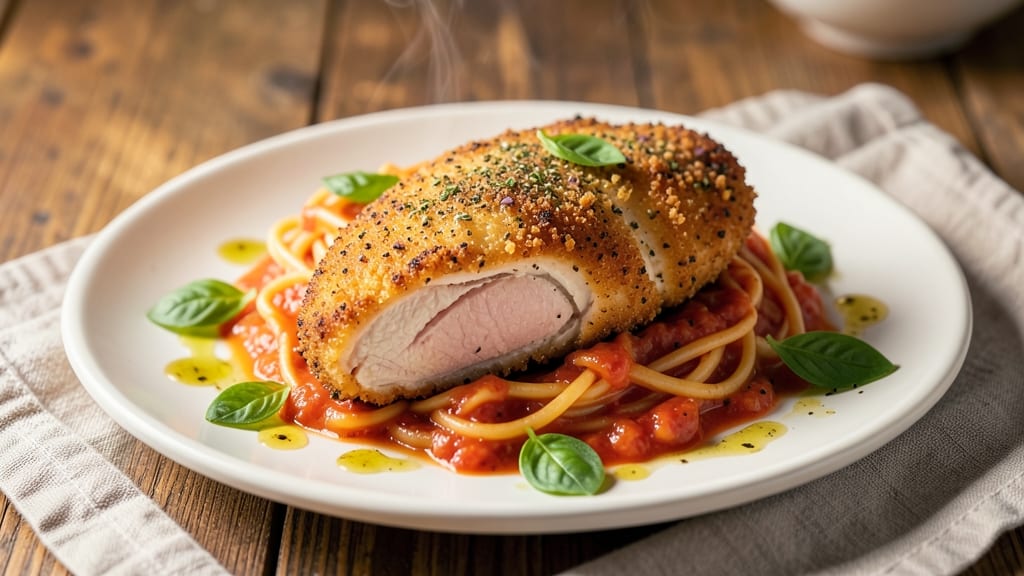
This breaded chicken with pasta sauce recipe delivers the ultimate comfort food experience—crispy golden chicken paired with rich, velvety tomato sauce that feels like a hug in a bowl.
The secret lies in a three-step breading process (flour, egg wash, seasoned breadcrumbs) that creates an irresistible crunch, while the sauce simmers just long enough to develop deep, savory notes without losing brightness.
I designed this dish to balance restaurant-quality technique with weeknight simplicity, so you get that satisfying crunch and saucy satisfaction without spending hours in the kitchen.
The foolproof breading method ensures your chicken stays crispy even when tossed in sauce, thanks to a quick pan-fry that locks in the texture.
Meanwhile, the pasta sauce—built on a foundation of canned tomatoes, garlic, and herbs—develops layers of flavor as it simmers, creating a saucy, comforting base that pairs perfectly with the chicken. The best part? This recipe scales effortlessly, whether you're feeding a family or meal prepping for the week.
By the time you plate this dish, you'll have crispy, golden chicken drenched in a rich, aromatic sauce, ready to be served over al dente pasta, garlic bread, or even as a hearty bowl with a side salad.
The contrast of textures—crunchy exterior, tender meat, and silky sauce—makes every bite worth it. This is the kind of meal that turns a simple dinner into a memorable experience.
Ready to master the technique? The 15-minute prep and 20-minute cook time mean you'll have dinner on the table faster than takeout, but with flavors that taste like you put in the effort. Let's get started—your taste buds will thank you.
Ingredients for breaded chicken with pasta sauce
Crispy chicken meets velvety tomato sauce—just 15 ingredients for ultimate comfort food.
| Ingredient | Amount | Notes |
|---|---|---|
| Boneless, Skinless Chicken Breasts 🍗 | 1 ½ lb | Pounded to even thickness |
| All-Purpose Flour 🌾 | ½ cup | For dredging chicken |
| Large Eggs 🥚 | 2 whole | Beaten for egg wash |
| Panko Breadcrumbs 🍞 | 1 ½ cups | For crispy coating |
| Italian Seasoning 🌿 | 1 tbsp | For flavorful breading |
| Canned Crushed Tomatoes 🍅 | 28 oz | San Marzano preferred |
| Garlic Cloves 🧄 | 4 cloves | Minced for sauce |
| Extra-Virgin Olive Oil 🫒 | ¼ cup | For frying chicken |
| Dried Oregano 🌿 | 1 tsp | For sauce depth |
| Dried Basil 🌿 | 1 tsp | For herbaceous notes |
| Salt 🧂 | 1 tsp | Diamond Crystal preferred |
| Black Pepper 🌶️ | ½ tsp | Freshly ground |
| Vegetable Oil 🫒 | ½ cup | For sauce simmering |
| Red Wine Vinegar 🍷 | 1 tbsp | For acid balance |
| Sugar 🍬 | 1 tsp | To balance acidity |
The chicken breasts should be pounded to even thickness—this ensures they cook uniformly and get that perfect golden-brown crust. Grab boneless, skinless from the meat counter, ideally pre-cut to save time. I always buy free-range when possible, but standard works fine too. For the breading, Panko is non-negotiable—it stays crispy even when tossed in sauce. If you're short on time, pre-mix the flour and Italian seasoning in a bowl so it's ready when you need it. The sauce starts with San Marzano crushed tomatoes (they're sweeter and less acidic), but any good-quality canned tomatoes will work in a pinch.
No Italian seasoning? Mix dried oregano, basil, and thyme at a 1:1:1 ratio. Short on garlic? Garlic powder at half the amount works, but fresh is worth the extra minute. The red wine vinegar adds brightness—substitute lemon juice if you don't have it. For a quicker version, use store-bought marinara (just add the Italian seasoning to it). The olive oil for frying should be light, not extra-virgin—it has a lower smoke point. If you're meal prepping, double the sauce ingredients and freeze half for next time.
Keep the pounded chicken in the fridge until ready to use—it's best fresh. The dry breading mix (flour + seasoning) stays good for 1 week in an airtight container. The finished sauce reheats beautifully—just warm it gently on the stove. For crispy leftovers, broil for 2-3 minutes. This dish freezes well too: portion the chicken and sauce separately, then reheat in the oven at 375°F for 15 minutes. The Panko coating might get soggy if frozen too long, so aim to eat within 3 months.
Why You'll Love This Recipe
- Pantry-Friendly Crunch: I swear by this combo—flour, egg, panko—because it turns plain chicken into something ridiculously satisfying. No fancy marinades or specialty mixes needed; just three ingredients and a quick dip.
- Sauce That Sticks: That Italian seasoning in the breading? It’s the secret weapon. The panko soaks up the pasta sauce like a dream, so every bite is juicy, herby, and dangerously good—no soggy breading in sight.
- Weeknight to Potluck: Honestly, this is my go-to for anything: a lazy Tuesday dinner, a last-minute family gathering, or even packed lunches. The leftovers reheat like a dream, and the flavors only get better the next day.
- Budget Booster: Chicken breasts stretch further than you’d think when paired with pasta sauce, and panko is cheaper than pre-made breading. I’ve fed four people for under $15 with this—no guilt, just flavor.
Step-by-step instructions for breaded chicken with pasta sauce
Here's how to create golden, crispy chicken paired with a rich tomato sauce—simple steps for maximum flavor.
Prepare the Chicken for Breading
Begin by patting the 1.5 lb boneless, skinless chicken breasts completely dry with paper towels. This is crucial for crispy breading—any moisture will prevent the coating from sticking properly. Place each breast between two sheets of plastic wrap and pound to an even ½-inch thickness using a meat mallet or rolling pin. This ensures even cooking and prevents dry spots in the center.
In a shallow bowl, combine the 0.5 cup all-purpose flour, 1 tbsp Italian seasoning, 1 tsp salt, and 0.5 tsp black pepper. Dredge each pounded chicken breast in this mixture, pressing gently to adhere the flour evenly. Tap off any excess, then set the floured chicken aside on a wire rack. This step creates the foundation for that perfect crunchy crust.
Create the Egg Wash and Panko Coating
Crack the 2 whole large eggs into a second shallow bowl and whisk vigorously until no streaks remain. The eggs should be fully combined but still slightly thick. In a third bowl, mix the 1.5 cups panko breadcrumbs with an additional ½ tsp salt—this extra seasoning ensures every bite has maximum flavor.
Dip each floured chicken breast into the egg wash, letting any excess drip off before pressing it into the panko mixture. Coat both sides thoroughly, pressing firmly so the breadcrumbs cling tightly. Place the breaded chicken on a clean plate and let it rest for 10 minutes at room temperature. This brief rest allows the coating to adhere better and prevents it from falling off during frying.
Fry the Chicken to Golden Perfection
Heat 0.25 cup extra-virgin olive oil in a large skillet over medium heat until the oil shimmers but isn't smoking. Add the breaded chicken and cook for 4-5 minutes per side, turning carefully with a spatula, until the coating is deep golden brown and the internal temperature reaches 165°F. Don't overcrowd the pan—work in batches if needed to maintain even heat.
Transfer the fried chicken to a paper towel-lined plate to drain excess oil. Let it rest for 5 minutes before serving—this keeps the coating intact. The chicken should be crispy outside with juicy, tender meat inside. If the breading starts to soften while resting, cover it loosely with foil to maintain its crunch.
Simmer the Pasta Sauce
In the same skillet (no need to clean it—the browned bits add flavor), add 0.5 cup vegetable oil over medium heat. Once hot, add the 4 minced garlic cloves and sauté for 30 seconds until fragrant. Pour in the 28 oz canned crushed tomatoes, 1 tbsp red wine vinegar, 1 tsp dried oregano, 1 tsp dried basil, and 1 tsp sugar. Stir well to combine.
Bring the sauce to a gentle simmer, then reduce heat to low and let it cook uncovered for 20-25 minutes, stirring occasionally. You're looking for a thick, velvety consistency with concentrated flavors. Taste and adjust seasoning with additional salt or pepper if needed. The sauce should be rich, slightly tangy, and perfectly balanced—this is where all the comfort comes together.
Serve the Crispy Chicken Over Saucy Pasta
Slice the rested chicken into ½-inch thick pieces and arrange them over your choice of pasta (spaghetti, penne, or fusilli work beautifully). Ladle the warm pasta sauce over the top, coating the chicken and noodles evenly. Garnish with extra fresh basil or grated Parmesan if you like, though the dish is already packed with flavor.
Serve immediately while the chicken is still crispy and the sauce is hot. Each bite delivers that satisfying contrast of crunchy breading and silky tomato sauce, with juicy chicken at the heart of every forkful. This is comfort food at its finest—simple to make but impossible to resist.
Pro Tips For Making Breaded Chicken With Pasta Sauce
- USE COLD CHICKEN: Pat the chicken dry, then pop it in the freezer for 15-20 minutes before breading. I learned this the hard way—room-temperature breasts turn mushy when fried, and you end up with a soggy crust instead of that crispy, golden armor you want. Works especially well when using thicker cuts.
- DON’T SKIP THE DOUBLE-DIP: After the egg wash, press the chicken into the panko twice—first side to side, then top to bottom. The extra pass locks in the crumbs and fills the gaps where the egg would otherwise leak out during frying. Yes, it takes 30 seconds longer, but the difference in texture is night and day.
- WATCH THE OIL TEMP: Use a thermometer and aim for 350°F (175°C)—not the "smoking hot" pan you might think. Too hot burns the outside before the inside cooks, leaving you with a bitter crust and raw chicken. If you don’t have one, test with a bread cube: it should sizzle and float in 30 seconds.
- SAVE TIME WITH WET PANKO: Mix 1 tablespoon water or Italian dressing into the panko before breading. It sticks better to the egg, cuts down on wasted crumbs, and gives a slightly lighter crust. I was skeptical until I tried it—now I won’t go back. Just don’t overdo it, or the breading gets gummy.
Wine and beer pairings for breaded chicken with pasta sauce
Red Wine Pairings
For this dish, I always reach for a Chianti Classico from Tuscany—its bright acidity and cherry notes cut through the richness of the breaded chicken while complementing the tomato sauce beautifully. A Sangiovese from Montepulciano is another fantastic choice, offering earthy undertones that enhance the Italian seasoning in the breading.
Serve slightly chilled (55-60°F) to let the wine's acidity refresh your palate between bites. 🍷
Light Beer Matches
A crisp Italian lager like Peroni or Moretti is my go-to for this dish—its subtle malt sweetness balances the tangy tomato sauce without overpowering the crispy chicken. For a hoppier option, try a German Helles like Weihenstephaner—its clean, bready notes harmonize with the Panko coating.
Serve at 45-50°F to highlight the beer's crispness against the dish's richness.
White Wine Alternatives
If you prefer white wine, a Vermentino from Sardinia brings bright citrus and mineral notes that pair surprisingly well with the tomato sauce. I also love a Pinot Grigio from Alto Adige—its crisp acidity cleanses the palate between bites of crispy chicken.
Chill these wines to 45-50°F for the best experience.
Craft Beer Options
For craft beer lovers, a Belgian Witbier like Hoegaarden adds a refreshing citrus and coriander note that contrasts the dish's savory elements. A German Kölsch like Kölsch from Cologne also works beautifully—its light body and subtle malt sweetness complement the sauce without competing.
Serve these at 48-52°F to maintain their crispness.
Non-Alcoholic Pairings
Don't drink alcohol? A sparkling blood orange soda like San Pellegrino Aranciata Rossa mimics the acidity of wine while adding a refreshing citrus note. For a non-fizzy option, try a ginger beer like Feather—its spicy kick complements the dish's Italian flavors without overpowering them.
Serve both chilled (40-45°F) for the best experience. 💛
Nutrition facts
Frequently asked questions
Can I use chicken thighs instead of breasts for this recipe?
Chicken thighs work beautifully and stay juicier than breasts. Use 1.5 lb bone-in, skin-on thighs instead, and increase cooking time to 6-7 minutes per side until the internal temperature reaches 165°F. The skin will add extra crispiness to the breading, but remove it before serving if you prefer. Just be sure to pat the thighs very dry before breading—they're naturally more moist.
How do I keep the breading crispy when tossing it in sauce?
The key is timing and technique! First, fry the chicken until it's deep golden brown (not just light brown), then transfer it to a wire rack instead of a plate to drain oil. Keep the sauce warm but not simmering when adding the chicken—high heat makes breading soggy. For extra insurance, broil the chicken for 2-3 minutes right before serving to restore crispiness.
Can I make this recipe ahead of time?
Yes, but with some adjustments. Prepare the breaded chicken up to 1 day ahead and refrigerate uncovered on a wire rack. Fry just before serving to maintain crispiness. For the sauce, make it 1 day ahead and store in the fridge—it tastes even better after flavors meld! Reheat gently on the stove, then add the chicken at the last minute. For meal prep, freeze the sauce separately and reheat with the chicken.
What's the best pasta to serve with this?
Short, sturdy pastas work best to hold up to the sauce. Try penne or fusilli for maximum sauce cling, or rigatoni for hearty portions. For a lighter option, farfalle or gemelli add visual appeal. Cook pasta 1 minute less than package instructions—it'll finish cooking in the sauce. Don't skip salting the pasta water well!
Why did my breading fall off during cooking?
This usually happens from one of three issues: Wet chicken (don't skip patting dry!), overcrowding the pan (cook in batches), or not resting the breaded chicken (let it sit 10 minutes before frying). For extra adhesion, chill the breaded chicken for 15 minutes in the fridge before cooking. Also ensure your egg wash is room temperature—cold eggs can make breading stick unevenly.