
Sauces & Condiments
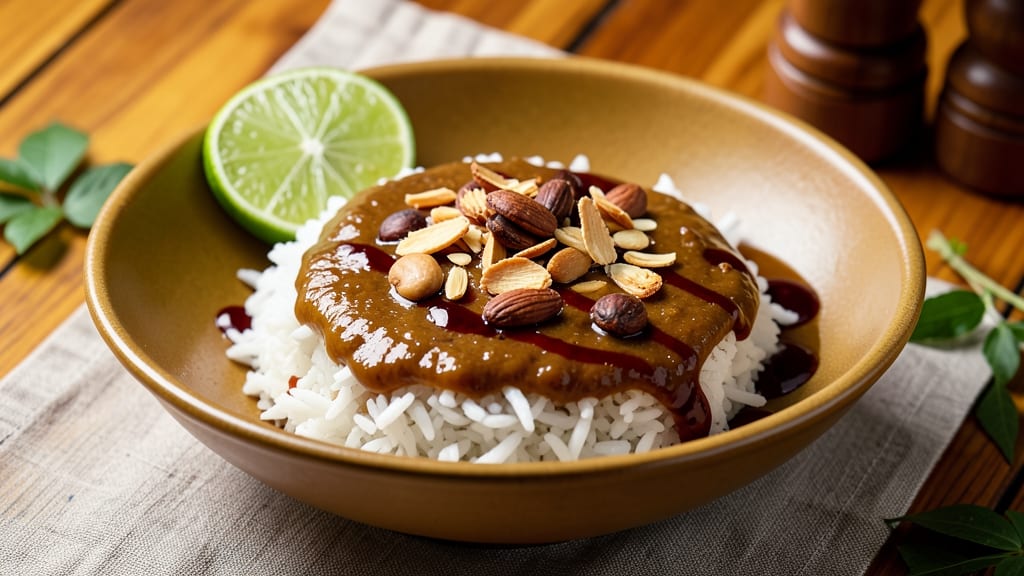
This Balinese peanut sauce recipe delivers the perfect harmony of nutty richness and aromatic spices that elevate every dish it touches. The secret lies in balancing toasted peanuts, tangy tamarind, and fragrant coconut milk into a velvety sauce that's both traditional and versatile.
I've refined this recipe over countless meals to ensure it's smooth, flavorful, and easy to adapt to your favorite proteins or grains.
The foundation of this sauce begins with dry-roasted peanuts, which develop deep, toasty notes that form the base. Tamarind paste adds that signature tangy-sweet balance found in Balinese cuisine, while aromatic spices like coriander and cumin create complex layers.
The sauce can be made in minutes with a blender, or left to sit for hours to develop even more depth of flavor.
What makes this sauce truly perfect is its adaptability—drizzle it over grilled meats, stir it into rice dishes, or use it as a bold dip for fresh vegetables. The texture remains silky whether you prefer it thin for dipping or thicker for glazing.
Each spoonful delivers that perfect combination of nutty, spiced sweetness that makes it a pantry staple.
For those short on time, I've included a quick version using store-bought ingredients, but the traditional method yields the most authentic results. The sauce keeps well in the refrigerator for up to a week, making it ideal for meal prep. Let's create this flavorful essential that will transform your cooking.
Ingredients for balinese peanut sauce
Toasted peanuts, tangy tamarind, and fragrant coconut milk create this velvety sauce that's perfect for dipping, drizzling, or glazing.
| Ingredient | Amount | Notes |
|---|---|---|
| Dry-Roasted Peanuts 🥜 | 1 ½ cups | Unsalted, toasted for depth |
| Tamarind Paste 🍈 | ¼ cup | Unadulterated for authenticity |
| Coconut Milk 🥥 | 1 can | Full-fat, 13.5 oz can |
| Natural Peanut Butter 🥜 | ½ cup | No added sugar or oil |
| Lime Juice 🍋 | ¼ cup | Freshly squeezed |
| Brown Sugar 🍚 | ¼ cup | Light or dark preferred |
| Ground Coriander 🌿 | 1 tbsp | Freshly ground preferred |
| Ground Cumin 🌿 | 1 tbsp | Toasted for warmth |
| Garlic Cloves 🧄 | 4 cloves | Peeled, roughly chopped |
| Red Chili Flakes 🌶️ | 1 tsp | Adjust for heat preference |
| Salt 🧂 | ½ tsp | Kosher or sea salt |
The peanuts are non-negotiable—dry-roast them yourself for that deep, nutty aroma. Trader Joe's has the best unsalted peanuts in bulk, but any natural brand works. Tamarind paste can be tricky to find, so check the Asian aisle or order online. Fresh tamarind pulp from pods is ideal, but the paste is fine in a pinch. Toast your spices too—coriander and cumin release their oils when warmed, adding layers of flavor that jarred versions miss. The garlic? Roast it first for a sweeter, mellow taste that blends perfectly.
No tamarind? Lime juice plus 1 tbsp maple syrup gets you close, though it won't be identical. Short on peanuts? Cashews or almonds work, but the texture will differ slightly. The coconut milk can be swapped for light coconut milk if you prefer a lighter sauce, but full-fat gives that luxurious mouthfeel. Chili flakes too spicy? Reduce to 0.5 tsp or swap cayenne. For a quicker version, use store-bought peanut butter, but natural is worth the extra minute of blending.
This sauce keeps beautifully—1 week in the fridge sealed in a jar with a thin layer of oil on top. Freezes for 3 months if you want to make a big batch. I always double the recipe because it disappears fast—drizzled over grilled chicken, stirred into noodles, or used as a dip for veggies. The flavor actually improves after sitting for a few hours, so let it rest if you can. Store-bought peanut butter? Taste it first—some brands have added oils that can make the sauce separate.
Why You'll Love This Recipe
- Pantry Magic: I swear by this sauce because it’s made with stuff I already have. Dry-roasted peanuts, a block of tamarind paste, and coconut milk—no fancy shopping required. Honestly, the tamarind gives it that tangy depth without needing specialty ingredients.
- Tangy-Creamy Obsession: The lime juice cuts through the richness of the peanut butter and coconut milk, but the tamarind? That’s the secret weapon. It’s sweet, sour, and umami all at once—like a party in your mouth that doesn’t quit.
- Dips, Dresses, Glazes: This sauce works as a dip for veggies, a dressing for noodles, or even a glaze for grilled chicken. I’ve used it on everything from stir-fries to ice cream (yes, really). It’s the kind of recipe that makes you feel like a culinary chameleon.
- Leftovers That Shine: Make a double batch—it keeps for weeks in the fridge. The flavors actually get better as it sits, and it’s cheap enough that I don’t feel guilty about using it up in a week. My wallet and taste buds win.
Step-by-step instructions for Balinese peanut sauce
Here's how to craft this nutty, aromatic sauce that's rich in flavor and perfectly balanced.
Toast the Peanuts for Maximum Flavor
Heat a dry skillet over medium heat and add the 1.5 cups dry-roasted peanuts. Toast them for 3-4 minutes, stirring constantly, until they're fragrant and just beginning to turn a deeper golden color. This step enhances their natural oils and intensifies their nutty flavor—don't skip it!
Watch closely as they toast—peanuts burn quickly. When they smell irresistibly rich and you see the edges starting to darken slightly, remove them from the heat and transfer to a plate. Let them cool for 2 minutes before grinding. This prevents the oil from splattering when you process them later.
Grind the Peanuts with Spices and Garlic
In a food processor, combine the toasted peanuts with the 4 cloves garlic cloves, 1 tablespoon ground coriander, 1 tablespoon ground cumin, and 1 teaspoon red chili flakes. Pulse until the mixture resembles coarse sand—you want some texture, not a smooth paste. This creates the perfect balance of nutty and spiced layers in your sauce.
If your food processor struggles, work in batches. The spices should be evenly distributed but still visible as specks. Here's the thing—this texture is what gives Balinese peanut sauce its signature depth. Don't over-process or you'll lose that beautiful complexity.
Cook the Spiced Peanut Base
Transfer the ground peanut mixture to a saucepan and cook over medium-low heat for 5-6 minutes, stirring constantly. You'll see the mixture darken slightly as the spices toast further and the peanut oils begin to render. This step develops the sauce's foundation—don't rush it.
After 5 minutes, add the 0.5 cup natural peanut butter and stir until fully melted and smooth. The peanut butter will thicken the sauce and add that signature creamy richness. Keep the heat at medium-low—too high and the peanut butter will scorch before it melts completely.
Build the Sauce with Tamarind and Sweetness
Increase the heat to medium and add the 0.25 cup tamarind paste and 0.25 cup brown sugar. Stir vigorously for 2-3 minutes until the tamarind dissolves completely and the mixture becomes smooth. The tamarind adds that signature tangy depth, while the brown sugar balances the heat from the chili flakes.
Here's where it gets interesting—the tamarind paste can be sticky. Use a silicone spatula to scrape up any bits from the bottom of the pan. You want every last drop incorporated for maximum flavor. The sauce should begin to bubble gently but not boil vigorously.
Finish with Coconut Milk and Lime
Pour in the 1 can coconut milk and 0.25 cup lime juice, then add the 0.5 teaspoon salt. Stir well and bring the mixture to a gentle simmer over medium heat. Let it cook for 5-7 minutes, stirring occasionally, until it thickens to your desired consistency—it should coat the back of a spoon but still be pourable.
The lime juice brightens the flavors and cuts through the richness, while the coconut milk adds that creamy, tropical element. Taste as you go—you might want to adjust the sweetness or heat to your preference. Once you're happy with the balance, remove from heat and let it cool for 5 minutes before serving.
Pro Tips For Making Balinese Peanut Sauce
- Toast Your Peanuts: Skip the dry-roasted bag—freshly toast whole peanuts in a dry pan over medium heat for 5-7 minutes, stirring constantly, until they’re golden and fragrant. The extra effort makes the sauce richer and nuttier, especially when blended into the tamarind base.
- Soak Tamarind Paste: Tamarind paste is stubborn. Soak the block in warm water for 10 minutes before scraping it out—this guarantees a smooth, lump-free mix. I used to force it raw, and the sauce always had gritty bits.
- Simmer Slowly: Let the sauce simmer uncovered on low heat for at least 15 minutes after adding coconut milk. This evaporates excess water and deepens the peanut flavor without curdling. Rushing it makes the sauce thin and bland.
- Balance the Lime: Add lime juice gradually—start with half the recipe’s amount, taste, then adjust. Too much turns the sauce sharp; too little flattens the tamarind’s tang. I keep a small bowl of lime juice nearby to tweak as I go.
Troubleshooting this recipe
Grainy Texture Fix
If your sauce ends up too thick or grainy after blending, add 1-2 tablespoons of warm water at a time while blending until smooth. I’ve found that immersing the blender blade in hot water for 10 seconds first helps break down stubborn peanut oils.
For extra insurance, strain the sauce through a fine-mesh sieve if needed—this removes any stubborn peanut bits while keeping the rich texture. 💫
Separation Issues
Peanut oils can separate if the sauce sits too long or if you use store-bought peanut butter with additives. To fix, gently reheat the sauce over low heat while whisking continuously until smooth.
For prevention, stir in 1 teaspoon of cornstarch mixed with 1 tablespoon water at the end of cooking—this stabilizes the emulsion. I’ve also had success adding ½ teaspoon of xanthan gum for extra binding power.
Weak Flavor Profile
If your sauce tastes bland, it’s likely because the spices weren’t toasted enough or the tamarind wasn’t fully dissolved. Next time, toast the spices in a dry pan for 30 seconds before adding them to deepen their aroma.
For the tamarind, simmer it with 2 tablespoons of water first to break it down completely. A final fix? Add ½ teaspoon of fish sauce or 1 teaspoon of soy sauce for umami depth—it’s a Balinese secret!
Too Sweet or Tangy
Adjust the balance by adding 1 teaspoon of lime juice if it’s too sweet, or ½ teaspoon more tamarind paste if it lacks tang. For a quicker fix, stir in 1 teaspoon of rice vinegar for brightness.
I’ve also found that reducing the sugar by 1 tablespoon and adding ½ teaspoon of salt can help—salt enhances perceived sweetness naturally. Taste as you go!
Burnt Peanut Flavor
Peanuts burn faster than you think! If your sauce has a bitter aftertaste, it means the peanuts were over-toasted. Next time, watch them closely and remove them as soon as they’re golden brown (about 3 minutes).
For a burnt batch, blend in 1 tablespoon of coconut cream to mellow the flavor and add richness. A pinch of cinnamon also helps mask the bitterness while adding warmth. 🔥
Storage Problems
If your sauce separates in storage, stir in 1 teaspoon of warm water and reheat gently. To prevent this, always store it in an airtight container with a thin layer of oil on top—this seals in moisture.
For longer storage, freeze in ice cube trays and thaw as needed. I’ve kept this sauce for up to 6 months in the freezer without quality loss—just thaw overnight in the fridge.
Nutrition facts
Frequently asked questions about Balinese peanut sauce
Can I make this sauce without tamarind?
Yes! Mix 2 tablespoons maple syrup with 1 tablespoon lime juice for a close substitute. The sauce will be slightly sweeter but still delicious. For extra tang, add ½ teaspoon rice vinegar to mimic tamarind's depth. This works best when the sauce has time to sit for 30 minutes before using.
How spicy should this sauce be?
The recipe uses 1 teaspoon red chili flakes for mild heat. Adjust to taste: reduce to ½ teaspoon for subtle warmth or increase to 1.5 teaspoons for noticeable spice. For a smoky kick, add ¼ teaspoon smoked paprika—it pairs beautifully with the nutty flavors. Always taste before serving!
Can I use this sauce as a marinade?
Thin the sauce with 2 tablespoons water per ½ cup sauce and use it as a marinade for 30-60 minutes on chicken, pork, or tofu. The peanut oils will tenderize while the spices infuse. For extra richness, brush 1 tablespoon coconut oil on the meat before applying the sauce.
Why does my sauce separate after blending?
Peanut oils naturally separate when cooled. Fix it by gently reheating the sauce over low heat while whisking until smooth. For prevention, stir in ½ teaspoon xanthan gum or 1 teaspoon cornstarch slurry at the end of cooking. Store with a thin layer of oil on top to preserve texture.
What are the best dishes to pair with this sauce?
This versatile sauce elevates grilled meats (especially chicken satay), rice dishes like nasi goreng, or even as a dip for spring rolls. Try drizzling it over steamed vegetables or mixing into peanut noodle soup. The nutty-sweet balance works surprisingly well with roasted potatoes or as a glaze for baked tofu.