
Sauces & Condiments
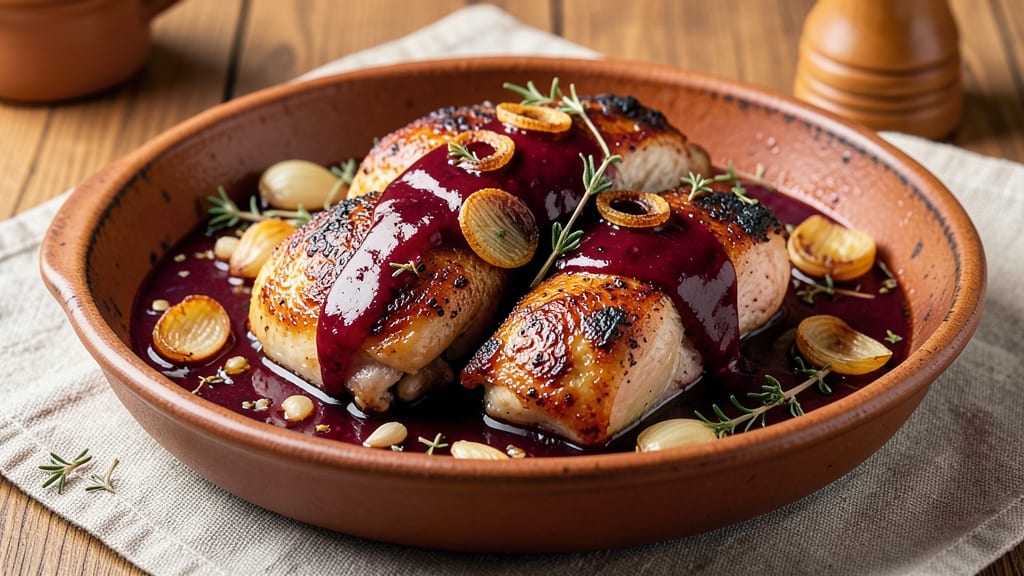
This baked chicken in wine sauce recipe transforms simple chicken thighs into melt-in-your-mouth perfection with a deep, velvety red wine reduction. The secret lies in braising the chicken slowly until fork-tender while building layers of flavor through deglazing and reduction—no fancy techniques required, just patience and proper timing.
What makes this dish truly special is how the wine sauce develops complexity as it simmers, creating a balance of richness and acidity that elevates even the most basic chicken cut.
The process begins with searing the chicken to lock in juices, then braising it in a rich marinade of red wine, aromatics, and herbs until the meat falls apart effortlessly. The sauce, reduced to a perfect consistency, coats each bite with a glossy, flavorful finish that's impossible to resist.
This method ensures your chicken stays juicy while achieving that restaurant-quality tender texture that's hard to find at home.
By the time you serve this dish, you'll have golden-brown chicken swimming in a glossy, aromatic sauce that's rich yet balanced—ideal for weeknight dinners or special occasions.
Pair it with crusty bread to soak up every last drop of that deep-red sauce, or serve alongside roasted vegetables for a complete meal. The result is a dish that feels luxurious without requiring hours in the kitchen.
For wine lovers, the red wine used in the sauce should complement the dish—think medium-bodied options like Pinot Noir or Chianti, which add depth without overpowering the chicken's natural flavor.
The braising technique ensures maximum flavor extraction, making this recipe both approachable for beginners and impressive enough for guests. Let's get started!
Ingredients for baked chicken in wine sauce
Fourteen ingredients transform ordinary chicken into restaurant-worthy wine-braised perfection.
| Ingredient | Amount | Notes |
|---|---|---|
| Chicken Thighs, Bone-In 🍗 | 1 ½ lb | Skin-on preferred, trimmed of excess fat |
| Dry Red Wine 🍷 | 1 cup | Medium-bodied like Pinot Noir or Chianti |
| Chicken Broth 💧 | 1 cup | Low-sodium preferred |
| Garlic Cloves 🧄 | 4 cloves | Minced, fresh preferred |
| Shallots 🧅 | 2 whole | Minced, or sub with 1/4 cup onion |
| Fresh Thyme 🌿 | ¼ cup | Leaves only, chopped |
| Fresh Rosemary 🌿 | 1 tbsp | Chopped, or 1 tsp dried |
| Olive Oil 🫒 | 2 tbsp | Extra-virgin for richness |
| All-Purpose Flour 🌾 | 2 tbsp | For sauce thickening |
| Unsalted Butter 🧈 | 2 tbsp | Cold, for sauce finish |
| Salt 🧂 | 1 ½ tsp | Diamond Crystal preferred |
| Black Pepper 🌶️ | ½ tsp | Freshly cracked |
| Red Wine Vinegar 🍋 | 1 tbsp | For acidity balance |
| Fresh Parsley 🌿 | ¼ cup | Chopped, for garnish |
The chicken thighs are non-negotiable here—bone-in, skin-on cuts stay juicier during the long braise. Look for thighs with good marbling at specialty butchers or the meat department of Whole Foods or Eataly for premium quality. If using frozen, thaw completely before searing. The red wine should be dry and medium-bodied; Pinot Noir or Chianti are ideal, but any bold red will work. For aromatics, fresh thyme and rosemary elevate the dish beyond basic herbs—Penzeys Spices carries excellent dried options if fresh isn't available, though fresh is preferred for maximum aroma.
No red wine? Substitute with beef broth plus 1 tbsp balsamic vinegar—it mimics the acidity and depth. Fresh shallots add nuance that onion can't replicate, but 1/4 cup finely minced yellow onion works in a pinch. The flour is critical for thickening the sauce; arrowroot powder at half the amount creates a glossier finish. For a richer sauce, add 1 tbsp heavy cream at the end. The butter finish is essential—it adds silkiness and balances acidity, so don't skip it. If you're short on time, use 1 tbsp olive oil instead, though the texture won't be as luxurious.
This dish tastes even better the next day as flavors meld, so make a double batch for leftovers. Store in an airtight container with the sauce for up to 4 days in the fridge. For longer storage, freeze the chicken and sauce together for 3 months—reheat gently in a saucepan with a splash of water. The sauce thickens when cold, so stir in 1-2 tbsp water when reheating. Garnish with fresh parsley just before serving to keep it vibrant, as it wilts quickly when added to hot dishes.
Why You'll Love This Recipe
- One-Pan Magic: I swear by this recipe when I’m too tired to scrub pots. Toss the bone-in thighs, shallots, and garlic on a sheet pan, pour in the wine and broth, and let the oven do the work—no flipping, no fuss, just golden perfection.
- Wine’s Secret Weapon: That dry red wine isn’t just for show—it deepens the sauce into something rich and complex, while the bone-in thighs stay juicy. Honestly, the first time I tried it, I nearly finished the bottle myself.
- Weeknight to Dinner Party: Same recipe, different vibes. Serve it over pasta for a quick weeknight meal, or plate it with crusty bread and a side salad for guests. The sauce thickens beautifully, so it works for both casual and fancy moments.
- Budget-Friendly Luxury: Bone-in thighs stretch further than breasts, and a bottle of wine goes a long way when reduced. Leftovers reheat like a dream—just add a splash of broth—and suddenly, you’ve got three meals for the price of one.
Step-by-step instructions for baked chicken in wine sauce
Here's the method that guarantees tender, fall-apart chicken with a rich, velvety wine sauce every time.
Sear the Chicken for Maximum Flavor
Preheat your oven to 375°F. Pat the 1.5 lb chicken thighs, bone-in dry with paper towels and season generously with 1.5 tsp salt and 0.5 tsp black pepper on both sides. This drying step is crucial—it ensures crispy skin and better browning.
Heat 2 tbsp olive oil in a large oven-safe skillet over medium-high heat. Once shimmering, add the chicken thighs skin-side down and sear for 4-5 minutes until the skin is golden brown and crispy. Flip carefully and sear the other side for another 3-4 minutes. The chicken should release easily from the pan—if it sticks, give it another 30 seconds. Remove from heat and set aside.
Build the Aromatic Base for the Sauce
In the same skillet (leave those flavorful browned bits behind), reduce heat to medium and add 2 tbsp unsalted butter. Once melted, add 2 whole minced shallots and 4 cloves minced garlic, cooking for 2-3 minutes until softened and fragrant. You'll smell the garlic transform—this is when it releases its full potential.
Stir in 0.25 cup fresh thyme and 1 tbsp chopped fresh rosemary, cooking for another 30 seconds until the herbs release their oils. Sprinkle in 2 tbsp all-purpose flour and whisk constantly for 1 minute to cook out the raw flour taste. This creates a proper roux that will thicken our sauce beautifully.
Deglaze and Simmer the Wine Sauce
Pour in 1 cup dry red wine and scrape up all the browned bits from the bottom of the pan with a wooden spoon. This deglazing step captures all the concentrated chicken flavor that would otherwise be lost. Let the wine simmer for 3-4 minutes until reduced by about half—you're looking for a syrupy consistency here.
Add 1 cup chicken broth and 1 tbsp red wine vinegar, then bring to a gentle simmer. Return the chicken thighs to the skillet, skin-side up, and cover with a lid or foil. This is where the magic happens—the chicken will braise in its own juices, becoming fork-tender while absorbing the wine's rich flavors.
Braise Until Fork-Tender
Transfer the skillet to the preheated 375°F oven and braise for 45-50 minutes. The chicken is done when it reaches an internal temperature of 175°F at the thickest part of the thigh and the meat pulls apart easily with two forks. If the sauce reduces too much before the chicken is done, add 1-2 tablespoons hot water to maintain the proper consistency.
Real talk: Don't be tempted to check the chicken early. The skin will brown beautifully during this time, and the sauce will develop its signature depth. The longer it braises, the more tender and flavorful the chicken becomes—this isn't a race.
Finish and Garnish
Remove the chicken from the oven and let it rest for 5 minutes while you reduce the sauce. Increase heat to medium-high and simmer the sauce uncovered for 3-4 minutes until it coats the back of a spoon. The sauce should be thick enough to cling to the chicken but still pour gracefully.
Spoon the sauce over the chicken and garnish with 0.25 cup chopped fresh parsley. Serve immediately with crusty bread or over mashed potatoes to soak up every last drop of that luxurious wine sauce. The chicken should be juicy with a crispy skin that shatters slightly when you cut into it, and the sauce should coat each bite with its rich, balanced flavors.
Pro Tips For Making Baked Chicken In Wine Sauce
- SEAR FIRST, THEN BAKE: Skip the slow start—hit those bone-in thighs with a quick sear in a hot pan (or oven) before adding the wine. The Maillard reaction on the bone and skin builds flavor that simmering alone can’t match. I used to skip this, and the sauce always tasted flat until I realized the chicken needed that initial punch.
- DEGLAZE WITH WINE IMMEDIATELY: As soon as you remove the chicken from the pan, pour in the red wine right away while the pan is still hot. Scrape up every browned bit—those bits are pure flavor. If you wait, you’ll lose half the depth of the sauce. (Yes, even if you’re in a hurry, this takes 30 seconds and makes a real difference.)
- SALT THE BROTH: Don’t assume the chicken broth is seasoned enough—taste it first, then add salt (and a pinch of sugar if it’s bitter). The broth carries the wine’s flavor, so if it’s bland, your sauce will be too. I learned this the hard way after making a sauce that tasted like watered-down wine.
- USE SHALLOTS RAW: Finely dice the shallots and toss them into the wine before simmering—no need to cook them first. They’ll soften as the sauce reduces, adding sweetness without burning. (I was skeptical until I tried it; the texture is silky, not mushy.) Skip the sautéing step unless you’re going for a caramelized look.
Common mistakes when making your baked chicken in wine sauce
Overcooking the Chicken
I’ve ruined more chicken than I’d like to admit by letting it overcook in the braise. The goal is 175°F internal temperature—any higher, and the meat turns dry and stringy. Use a meat thermometer (I swear by Thermoworks Smoke) to monitor progress.
If the sauce reduces too quickly, add 1-2 tbsp hot water to maintain moisture. Trust the process—this isn’t a race! 🌡️
Skipping the Sear
Skipping the sear is a huge mistake. That golden crust locks in juices and adds depth to the final dish. Always pat the chicken dry before seasoning—wet skin steams instead of crisps.
If your pan isn’t hot enough, the chicken will steam instead of brown. I’ve learned this the hard way: a proper sear makes all the difference in texture and flavor. 🔥
Using Low-Quality Wine
Cheap wine makes cheap sauce. The alcohol burns off during cooking, but poor-quality wine leaves behind harsh, bitter notes. Stick with medium-bodied reds like Pinot Noir or Chianti—they add complexity without overpowering. If you’re using cooking wine, don’t even bother—it’s not worth the compromise. Your sauce deserves better. 🍷
Ignoring the Rest Time
Letting the chicken rest for 5 minutes before serving is non-negotiable. This crucial step allows juices to redistribute, ensuring every bite is moist and flavorful. Cutting into it too soon sends all that delicious liquid running out of the pan. I’ve seen this mistake too many times—patience pays off! ⏳
Not Deglazing Properly
Deglazing is where all the flavor magic happens. Those browned bits stuck to the pan are packed with flavor—don’t rush this step! Use 1 cup dry red wine and scrape vigorously with a wooden spoon.
If you skip this, your sauce will taste flat and one-dimensional. Take your time here—it’s worth it. 💫
Over-Thickening the Sauce
Too much flour or too long a reduction turns the sauce into glue. The goal is a velvety, clingy consistency that coats the chicken without being pasty. If your sauce is too thick, stir in 1 tbsp hot water or broth to loosen it up.
A proper sauce should coat the back of a spoon but still pour gracefully. Balance is key! 🥄
Nutrition facts
Frequently asked questions
Can I use white wine instead of red in this recipe?
The recipe calls for red wine to complement the rich, meaty flavors of chicken, but you can substitute with white wine if needed. Use a dry white like Sauvignon Blanc or Chardonnay, and add 1 tsp balsamic vinegar to maintain acidity. The sauce will be lighter in color but still delicious—just expect a slightly different flavor profile.
How do I adjust this recipe for a slow cooker?
For a slow cooker version, sear the chicken first, then transfer it to the slow cooker with all sauce ingredients (except butter). Cook on low for 4-5 hours or high for 2-3 hours until tender. Finish by reducing the sauce on the stovetop with butter, then spoon it back over the chicken. The slow cooker makes this dish even more hands-off!
What's the best way to reheat leftovers?
Reheat gently in a saucepan over low heat with 1-2 tbsp water or broth to loosen the sauce. Avoid microwaving—it makes the chicken dry. Cover and warm for 5-7 minutes, stirring occasionally, until heated through. The sauce will thicken when cold, so a splash of liquid helps restore its glossy texture.
Can I make this recipe with chicken breasts instead?
Chicken breasts are leaner and cook faster, so they won't braise as tenderly. For best results, use bone-in, skin-on thighs as called for—they stay juicy during the long cooking time. If you must use breasts, pound them to 1/2-inch thickness and reduce braising time to 25-30 minutes, checking at 165°F internal temp.
What wines pair best with this dish?
For serving, choose a wine that complements the red wine sauce. A medium-bodied red like Pinot Noir or Chianti works beautifully, as does a bold Zinfandel for richer flavors. If you prefer white, a oaked Chardonnay balances the dish's richness. The key is matching the wine's body to the sauce's intensity—avoid overly tannic or light wines that might clash.